Details Restricted Under NDA
ENVIRONMENTAL EMISSION CONTROL SYSTEM
Overview
Led the end-to-end UX strategy, system architecture, and intelligence dashboard design of a confidential national environmental monitoring and emission control platform developed for a government-level disaster management authority.
Due to NDA restrictions, operational locations, technical specifications, and deployment scale remain confidential.
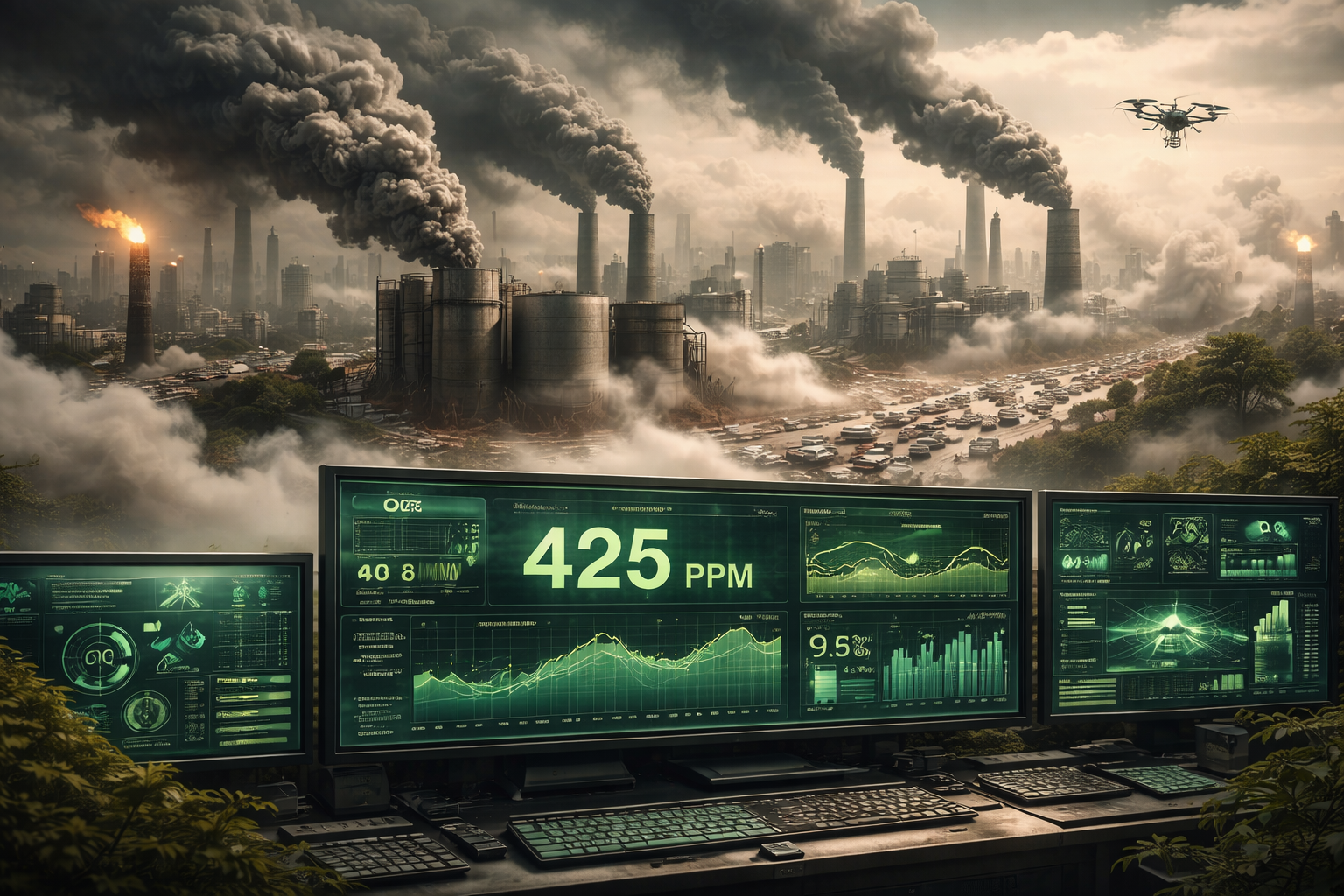
The platform functions as a centralized environmental command system, monitoring distributed pollution control units (POL devices) installed across multiple cities and industrial zones.
It enables:
- Real-time smoke and carbon footprint monitoring
- Predictive device maintenance
- Air quality and weather intelligence integration
- Factory emission compliance tracking
- Remote monitoring control
- Environmental risk reporting
The system transformed fragmented pollution monitoring into a unified national intelligence layer for environmental risk prevention and disaster readiness.
Capabilities of the Platform
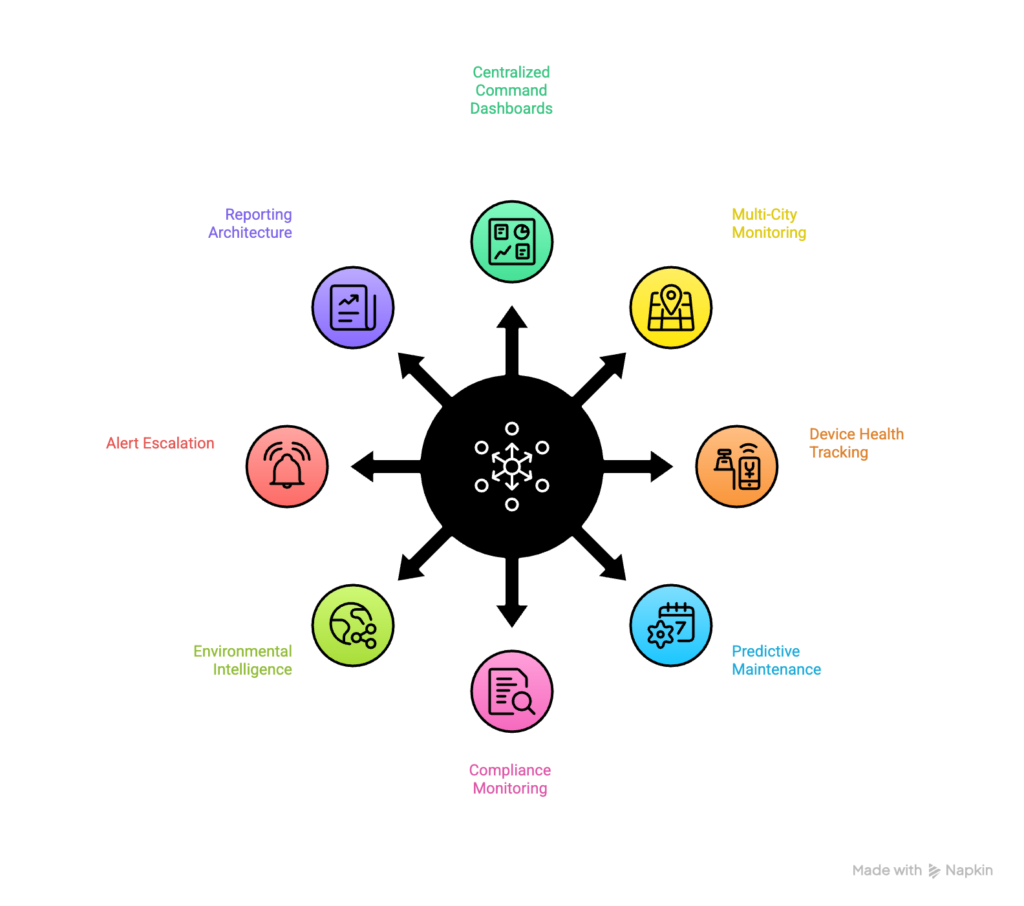
The platform operated as a centralized environmental intelligence environment combining monitoring, control, predictive maintenance, and compliance enforcement into a single structured workflow.
Real-Time Smoke & Carbon Monitoring
Continuous tracking of emission levels across cities with threshold-based alerting and region comparison.
Factory Compliance & Emission
Monitored industrial POL device usage, emission timing controls, and compliance violations with instant escalation triggers.
Device Health & Maintenance
Tracked sensor efficiency, device performance scores, service schedules, and part replacement forecasting.
Remote Monitoring Control
Enabled central command to adjust monitoring sensitivity, activate emergency protocols, and isolate malfunctioning units.
Air Quality & Weather Intelligence
Integrated AQI data, wind patterns, temperature, and humidity to forecast pollution dispersion and environmental risk impact.
Environmental Reporting & Analytics
Generated city-level, factory-level, and national carbon footprint reports with incident logs and performance benchmarking.
My Role
As Core UX Lead, I was responsible for shaping the intelligence workflow, system structure, and control architecture of the entire platform.
My responsibilities included:
Key KPIs & Impact Metrics
While deployment metrics remain confidential, the system focused on measurable environmental intelligence performance indicators such as:
- Reduction in emission response time
- Increased predictive maintenance accuracy
- Improved factory compliance monitoring efficiency
- Reduced environmental incident escalation
- Faster identification of sensor/device failure
- Improved air quality monitoring precision
Why This Project Matters
This was not just a monitoring interface — it was a centralized environmental command architecture.
The challenge was transforming distributed pollution monitoring hardware into a structured, secure, and actionable intelligence system capable of:
- Handling multi-city environmental data streams
- Converting noise into structured intelligence
- Predicting device-level failures before breakdown
- Enabling link-driven investigative reasoning
- Operating across national and international intelligence ecosystems
- Supporting disaster management authorities with real-time insight