Overview

Led the end-to-end UX strategy, research, and product design of a confidential intelligence-grade OSINT and investigation platform developed for national and international clients. Due to NDA restrictions, specific operational details, client names, and datasets cannot be disclosed.

This platform was built as a high-security intelligence system designed to support large-scale investigations, election monitoring, influence detection, target profiling, suspect discovery, and advanced link analysis across multi-source open data environments — including surface web and dark web intelligence contexts.

A key differentiator of the system was its AI-powered intelligence layer, designed to proactively detect emerging threats, identify narrative shifts, and assist analysts with early warning signals and strategic recommendations.

The product was successfully deployed for both national and international customers and received industry recognition for innovation and impact.

🏆 Award Recognition

This product won a major industry award at P@SHA Awards, recognizing it as one of the most impactful and innovative technology solutions of the year.

Capabilities of the Platform

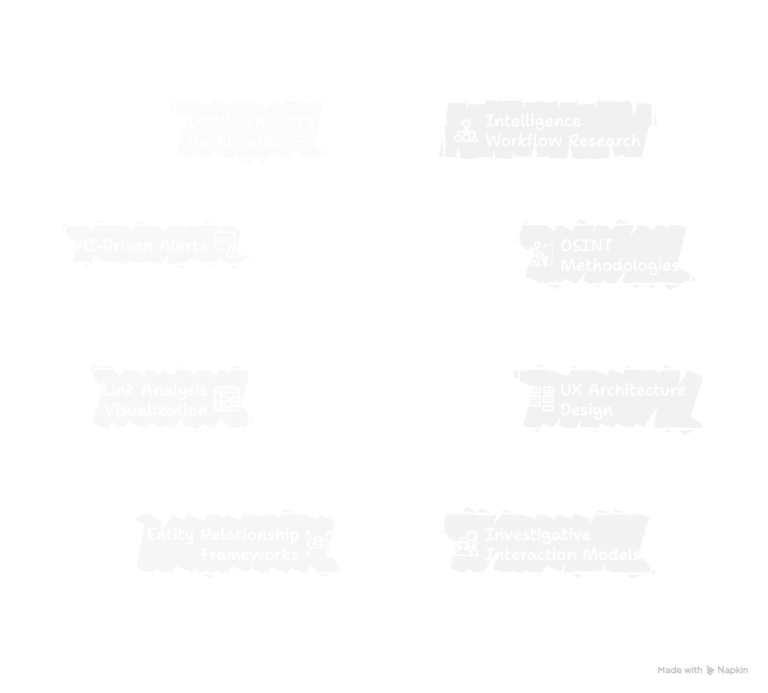
The platform operated as a single, integrated intelligence environment combining investigation, monitoring, profiling, AI prediction, and network analysis into one structured workflow.

My Role

As a Core Leading Member, I was responsible for shaping the investigative logic, UX architecture, and intelligence workflow design of the entire platform.

My responsibilities included:

Key KPIs & Impact Metrics

While operational metrics remain confidential, the product focused on measurable intelligence performance indicators such as:

Why This Project Matters

This was not just a dashboard project — it was a full-scale intelligence architecture. The challenge was transforming highly complex OSINT methodologies into a structured, secure, analyst-friendly system capable of:

This was not just a dashboard project — it was a full-scale intelligence architecture. The challenge was transforming highly complex OSINT methodologies into a structured, secure, analyst-friendly system capable of: