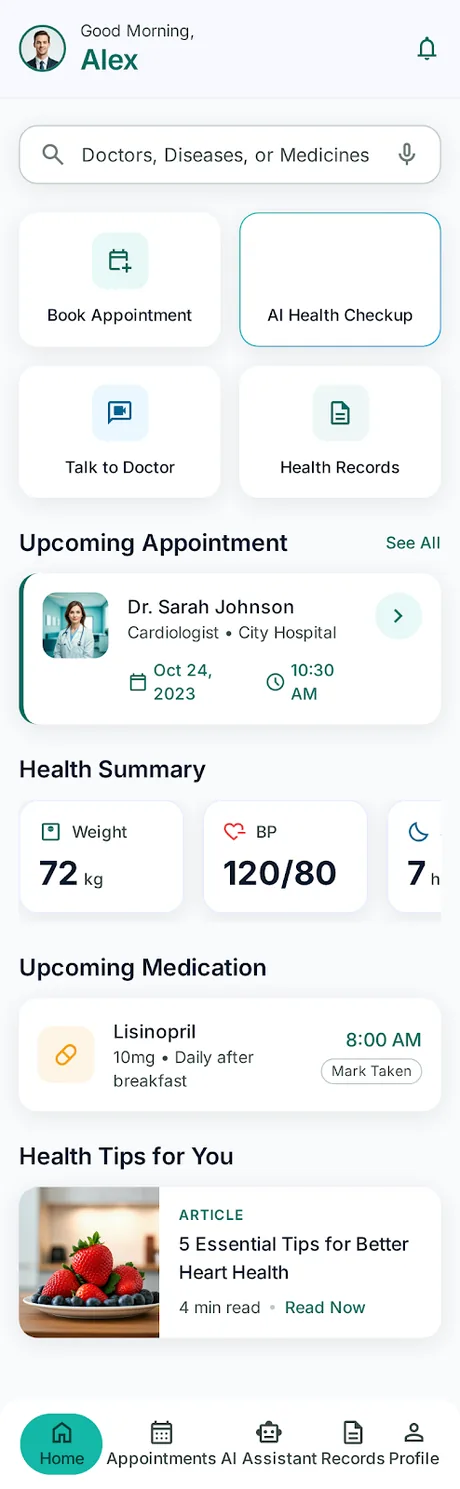
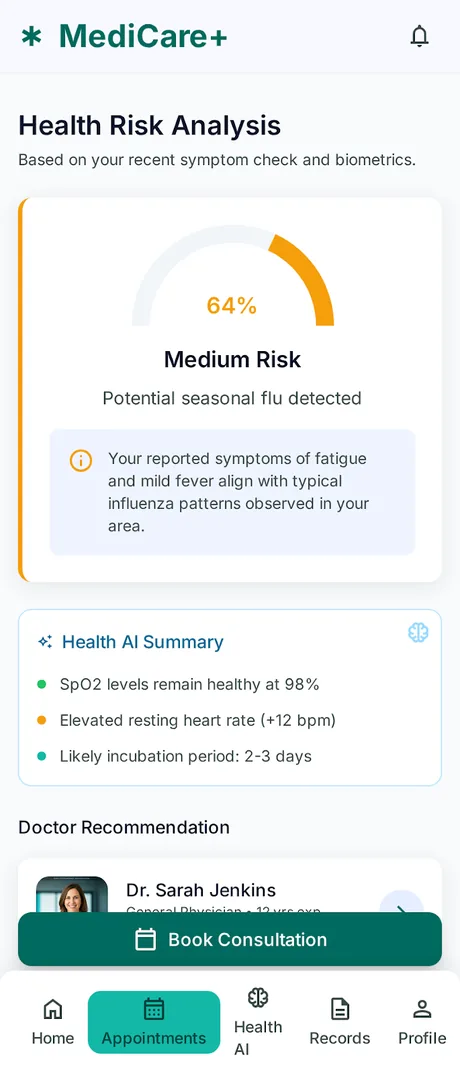
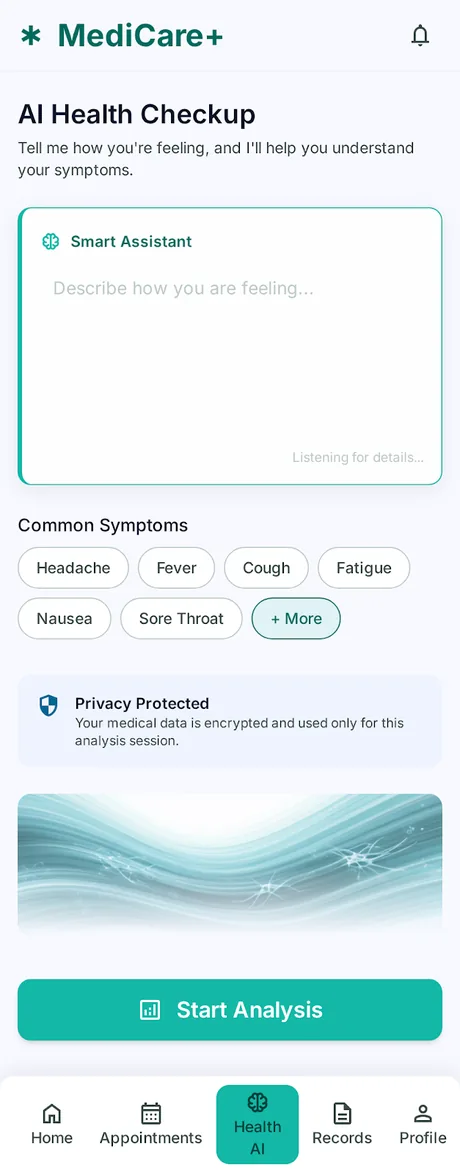
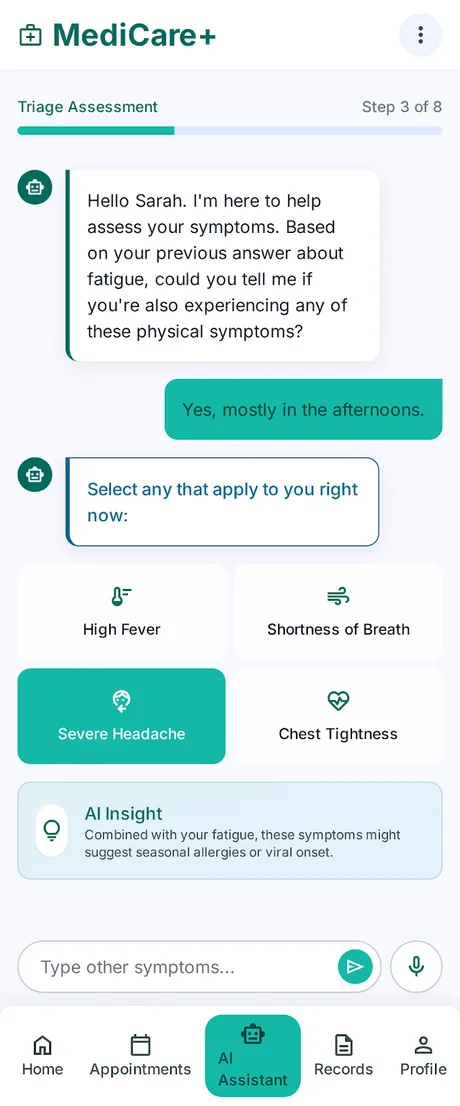
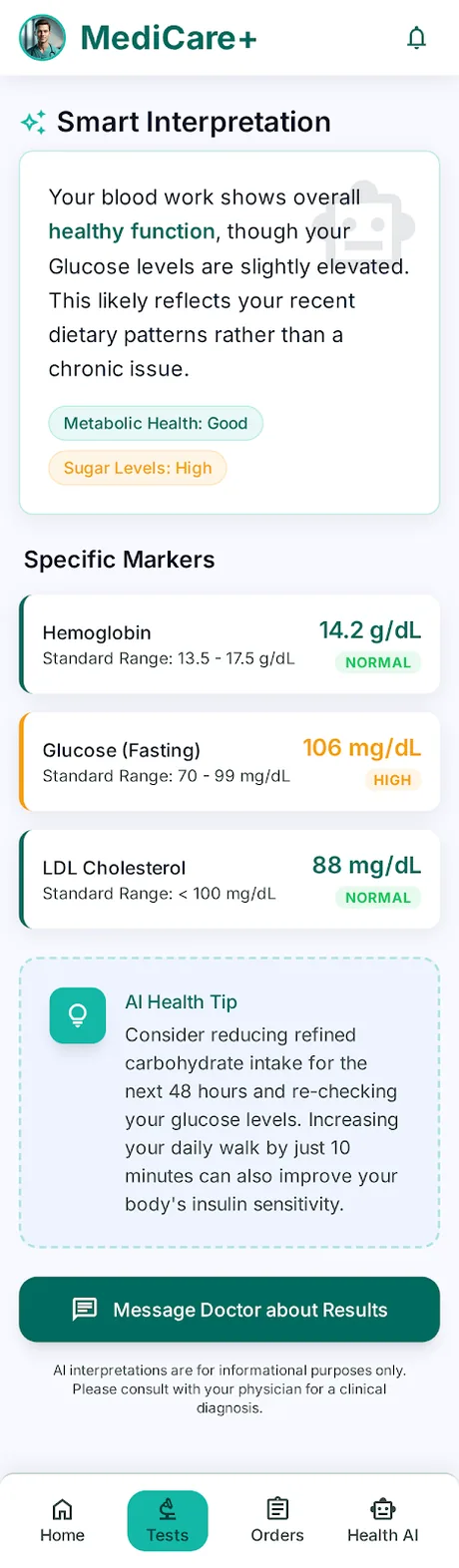
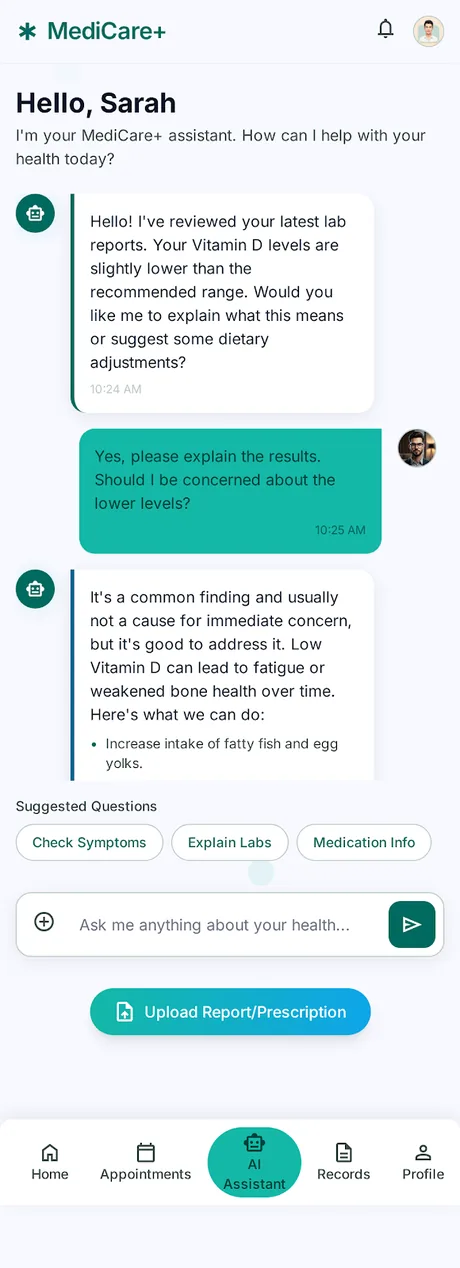
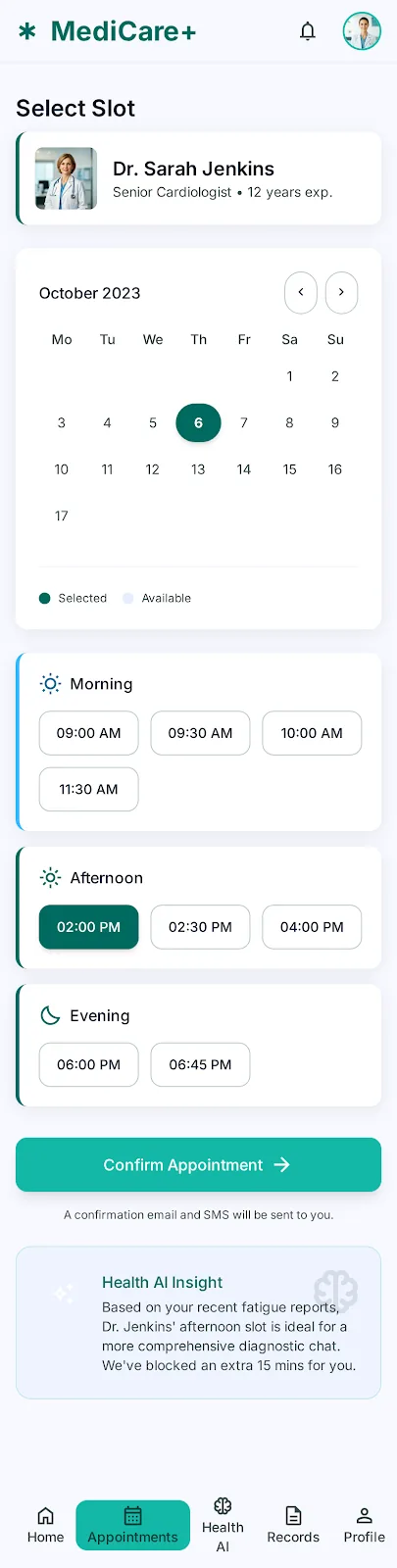
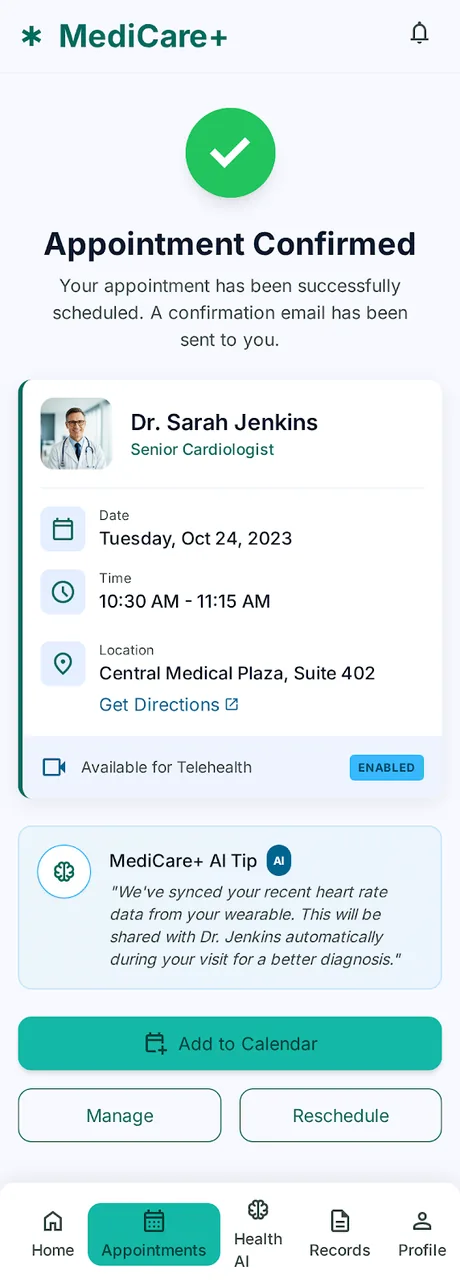
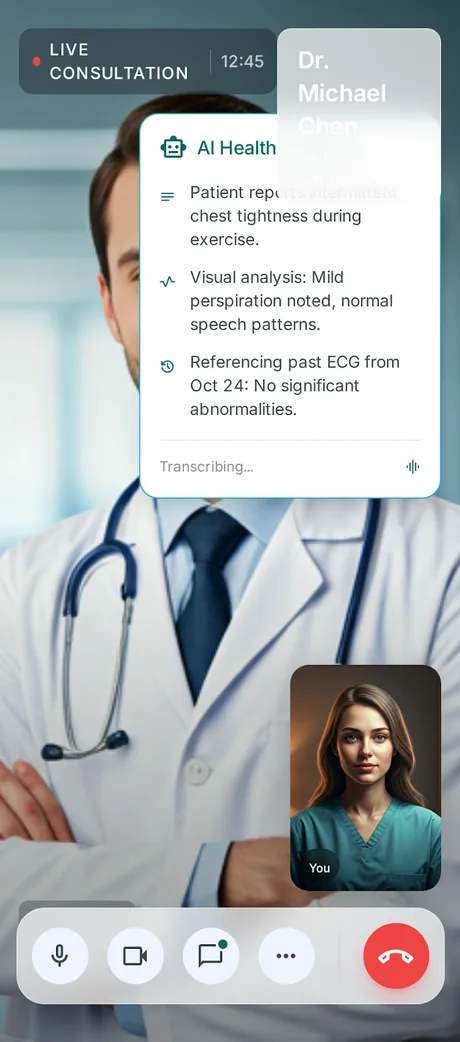
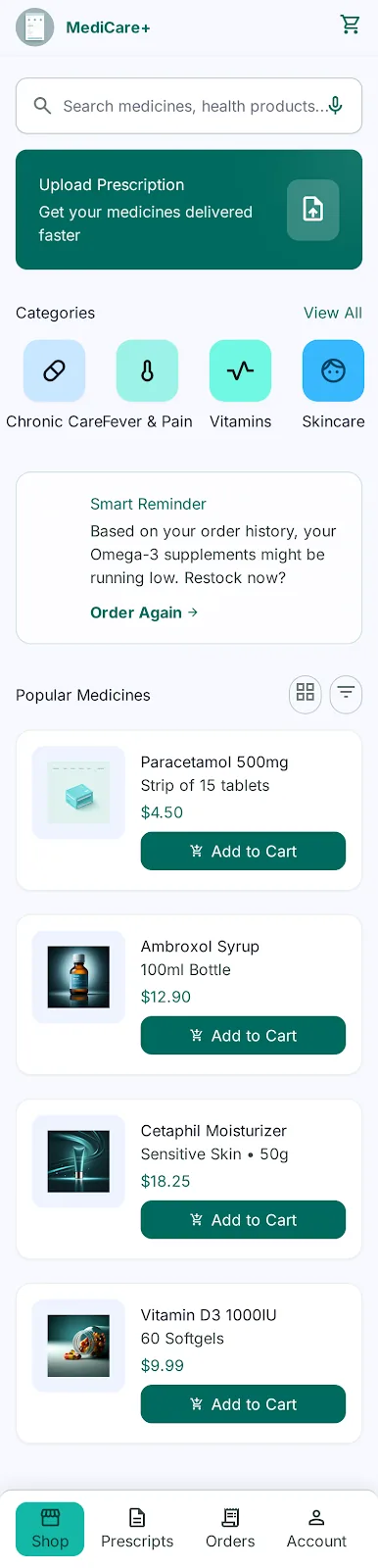
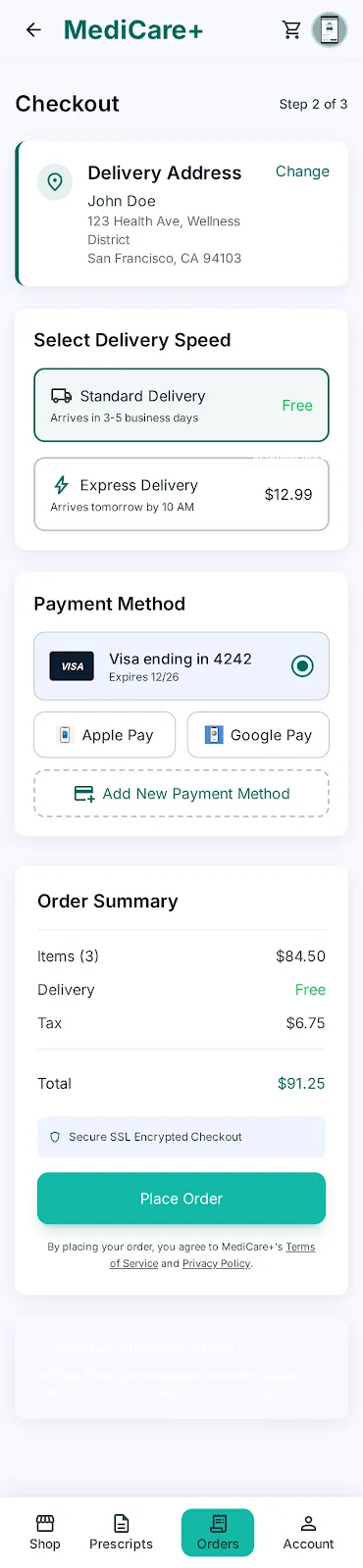
One system from a 2am symptom to medicine at the door — AI triage, video consults, e-prescriptions, pharmacy, labs and emergency response, across patient, doctor and admin.


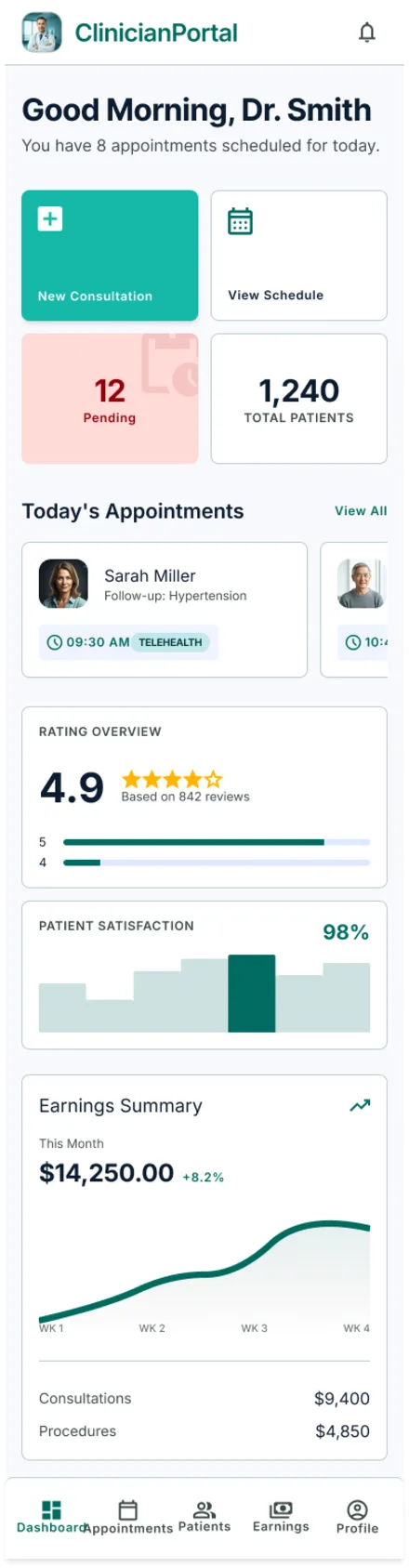
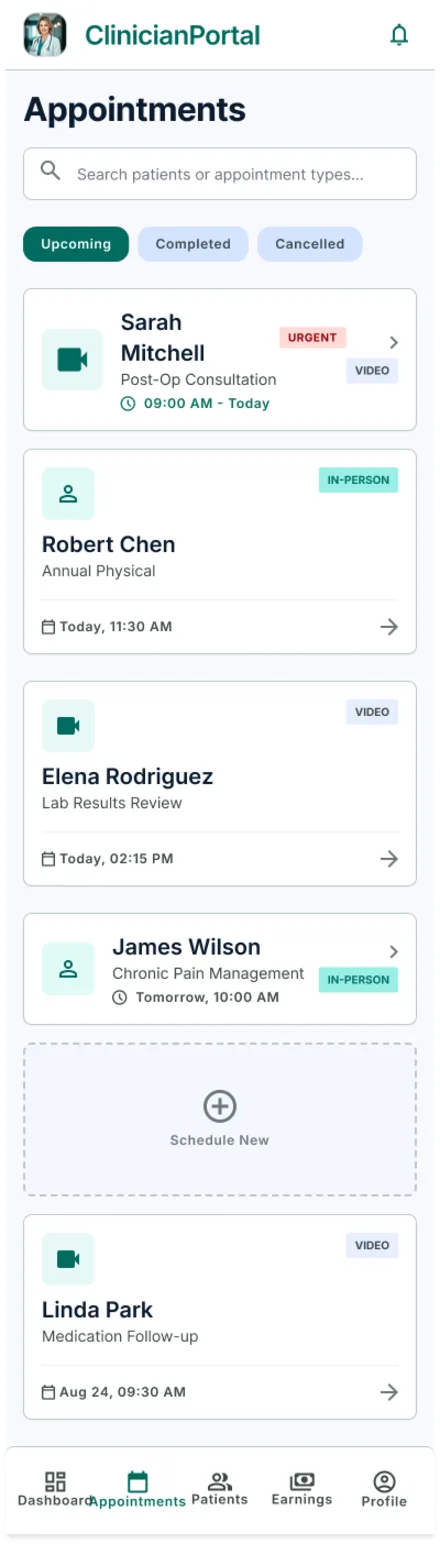
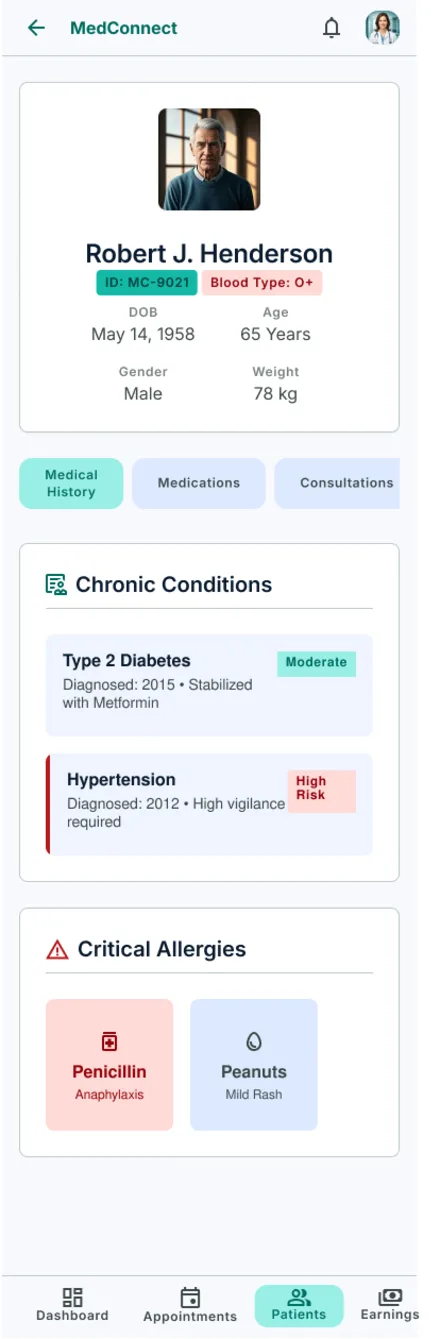
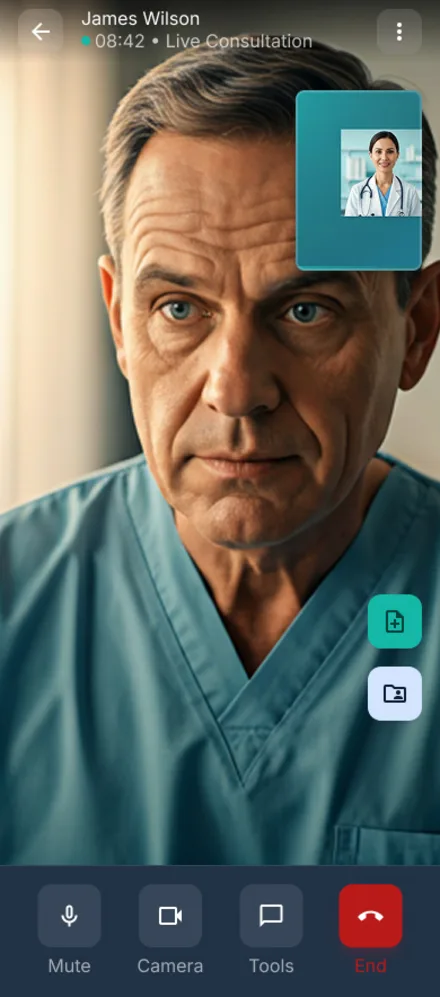
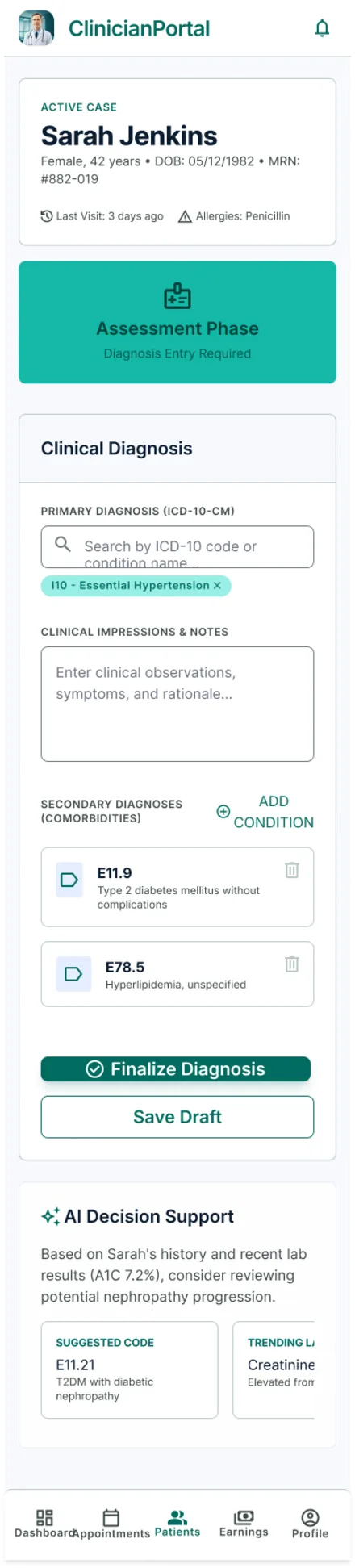
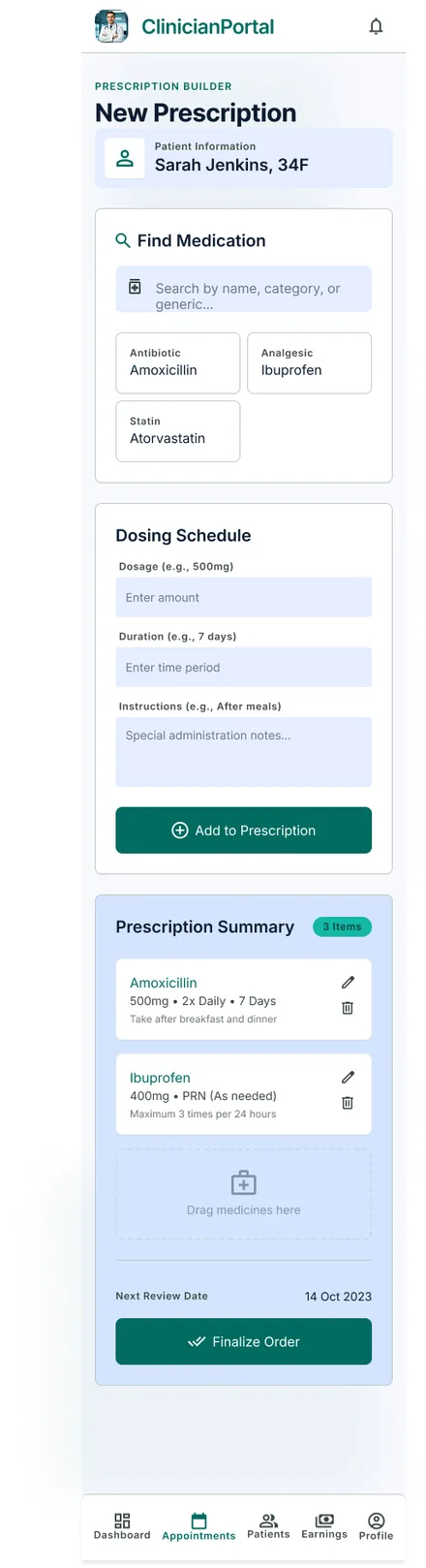
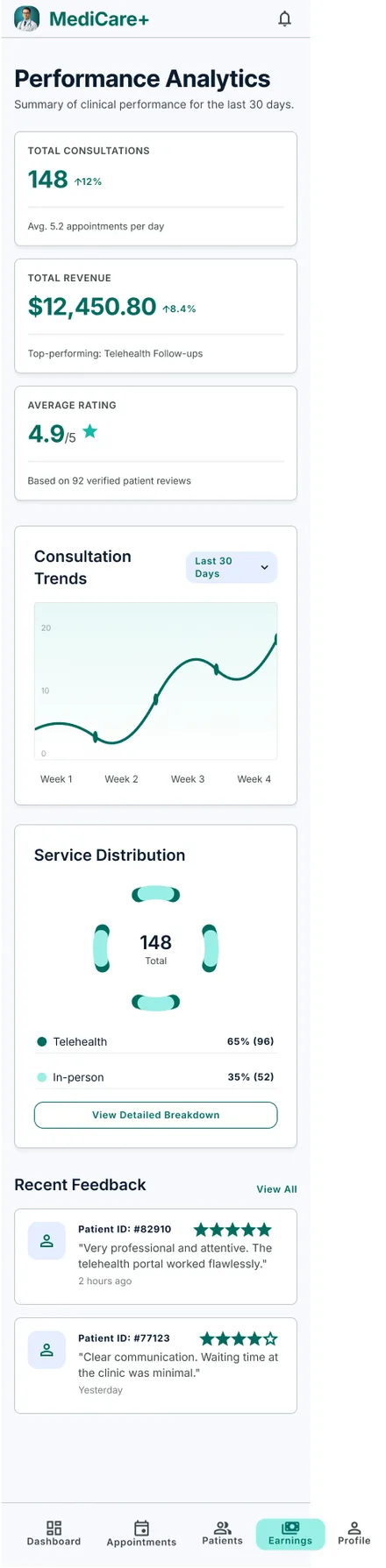
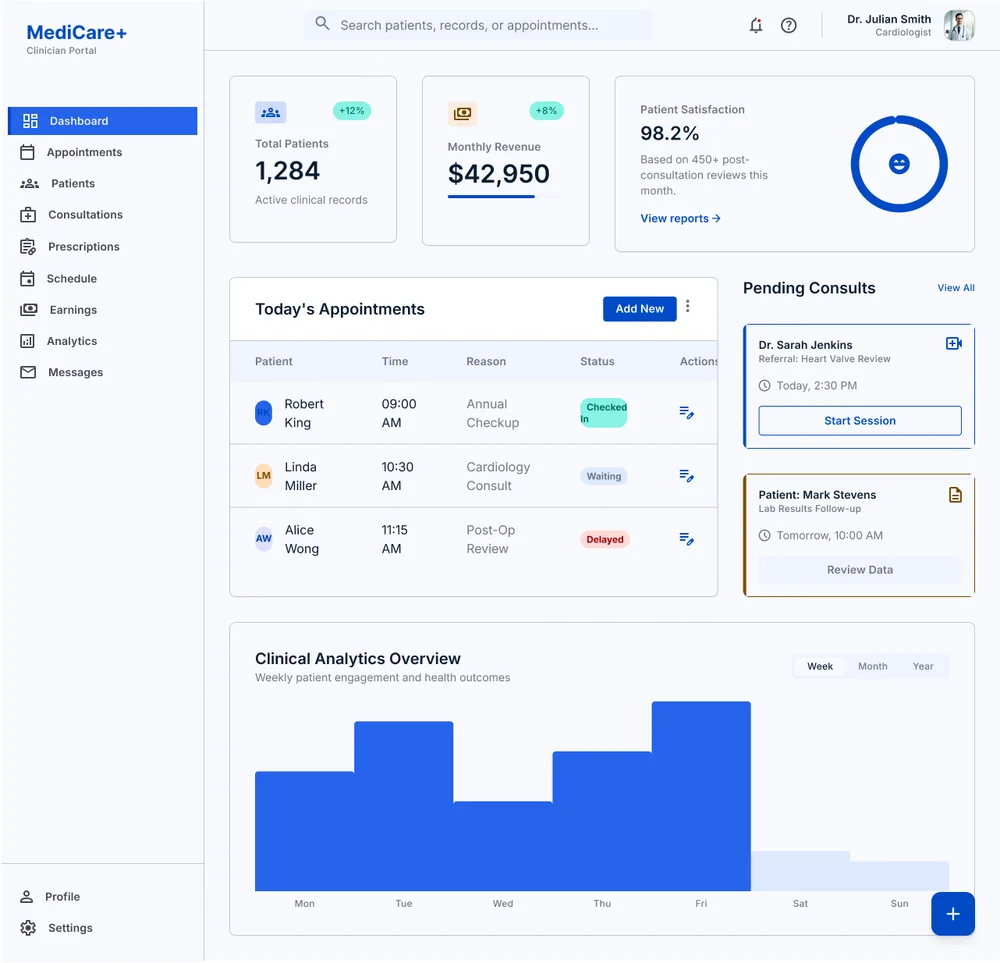
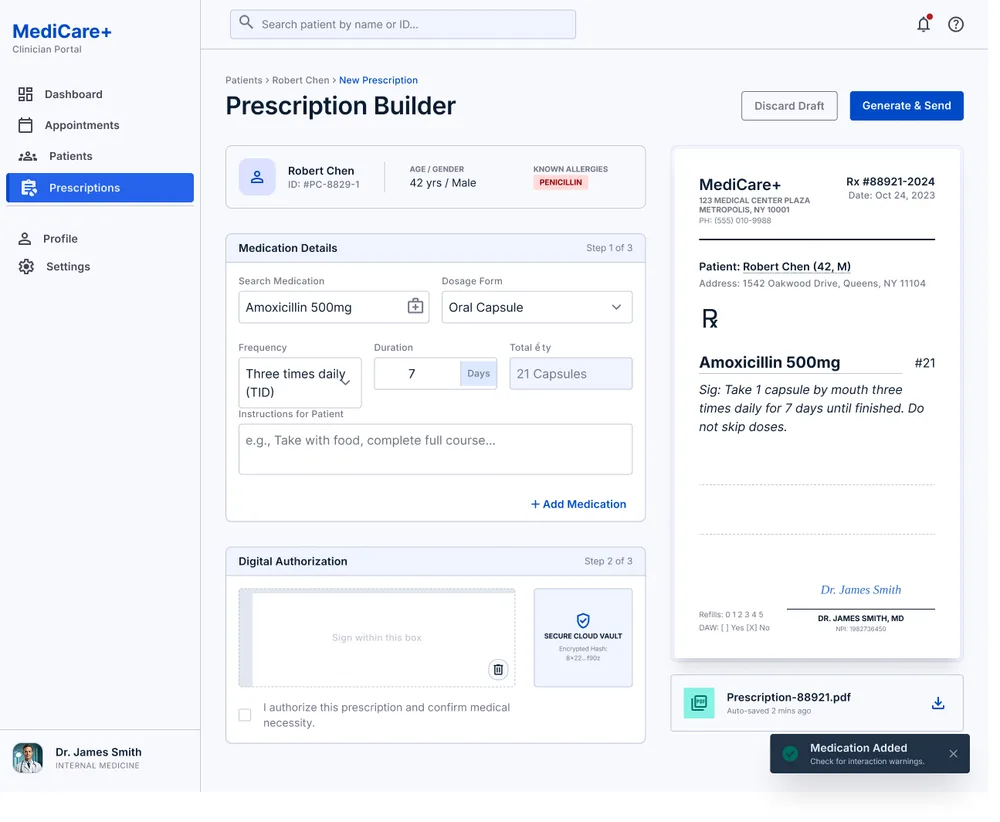
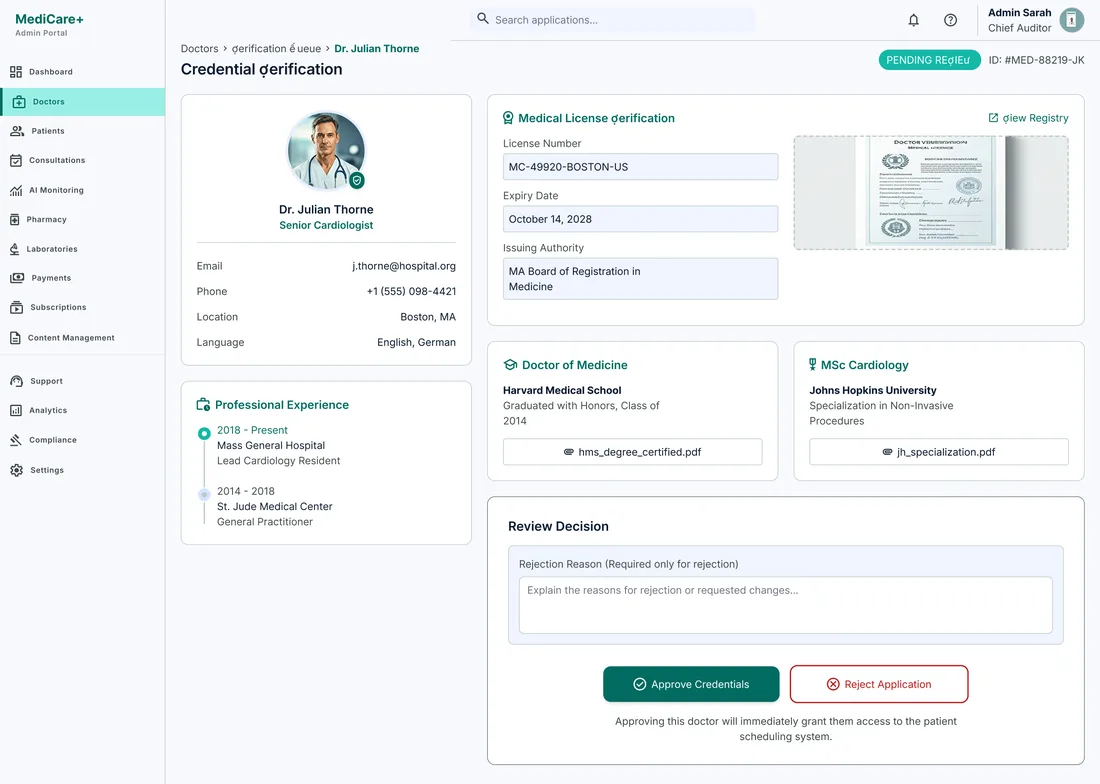
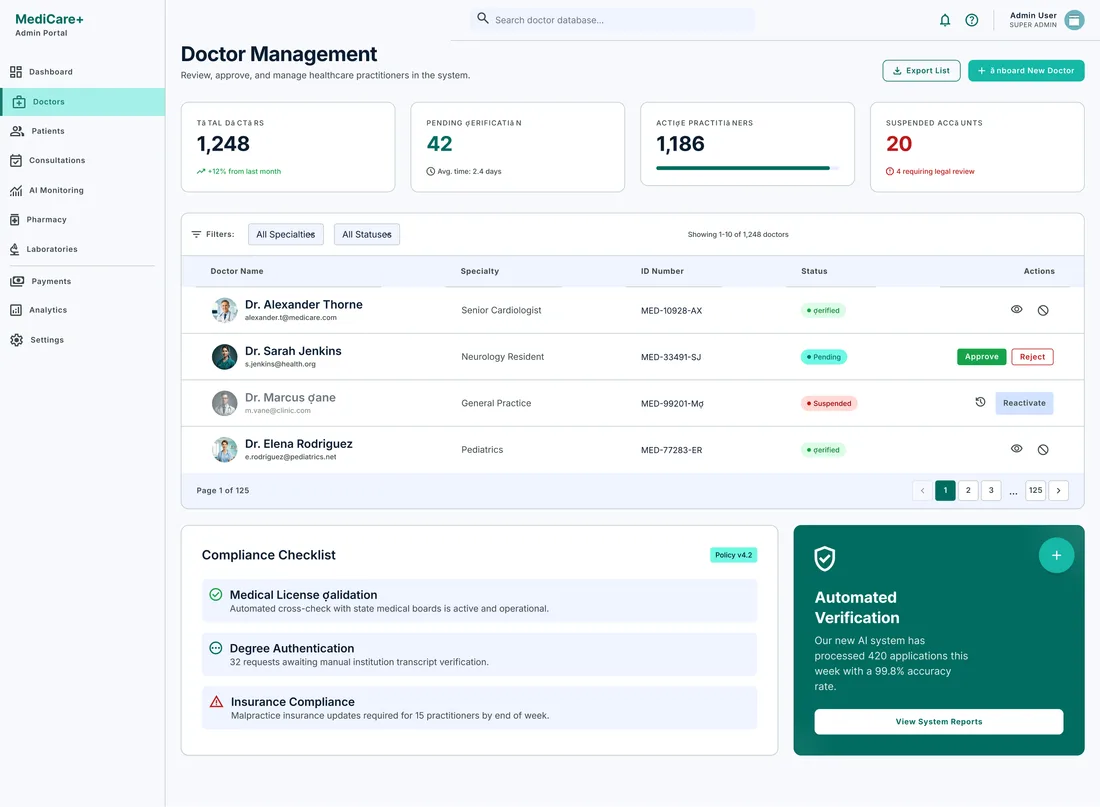
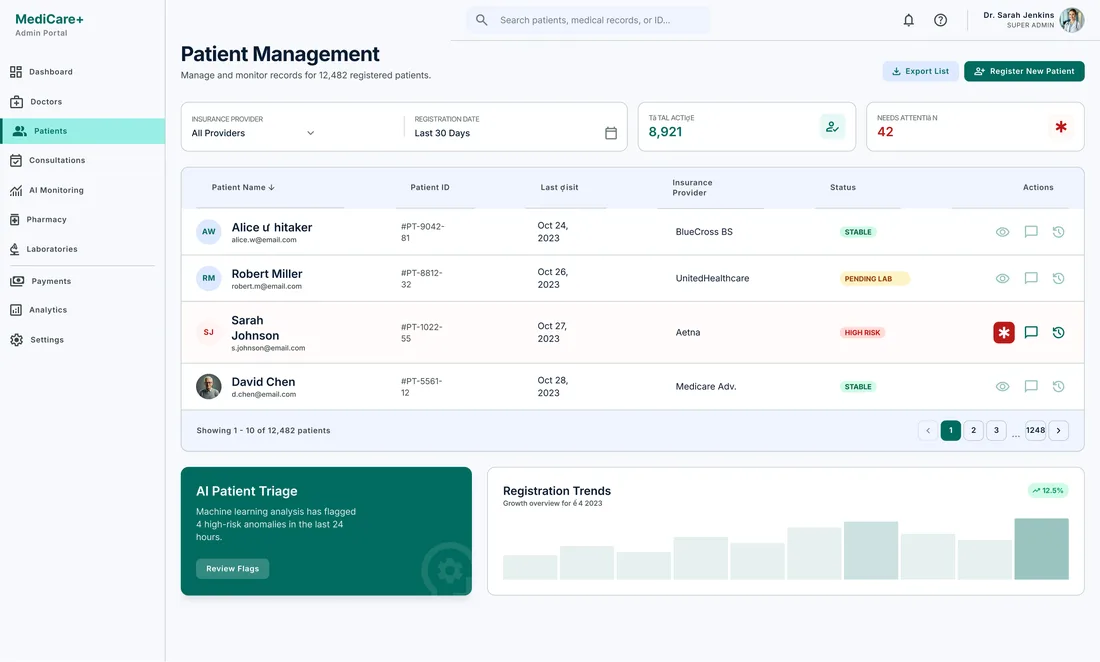
A patient app, doctor app, clinician portal and admin console — built to act as one system, not four.
Triage, consults, pharmacy, labs, records & SOS.
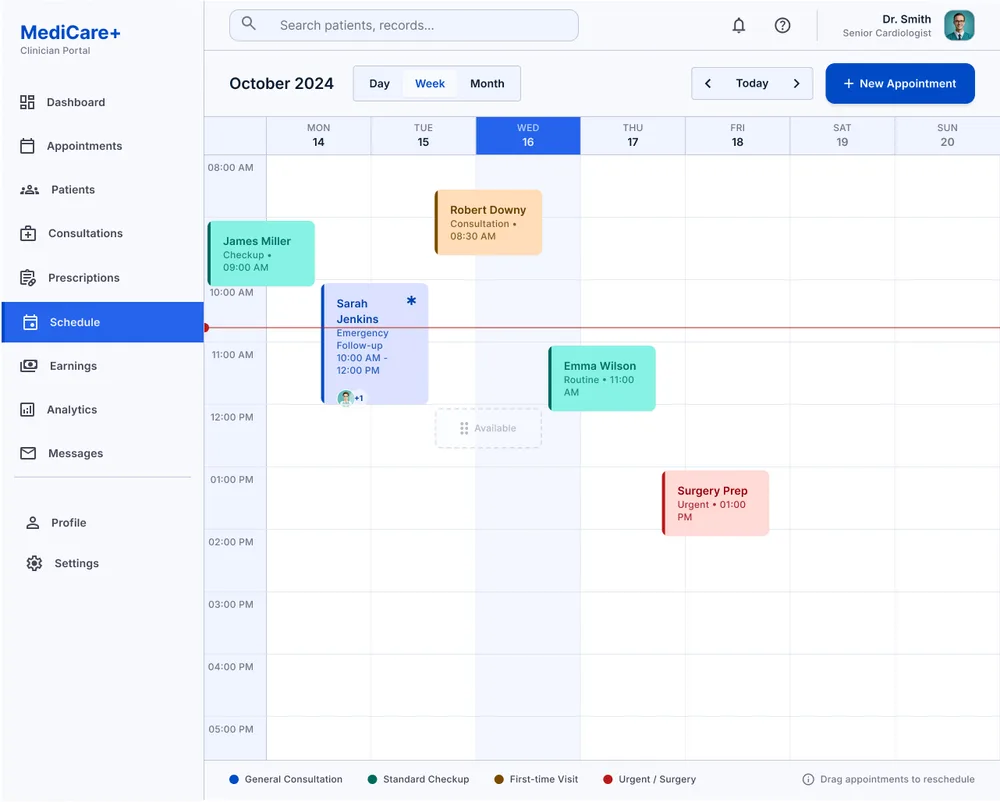
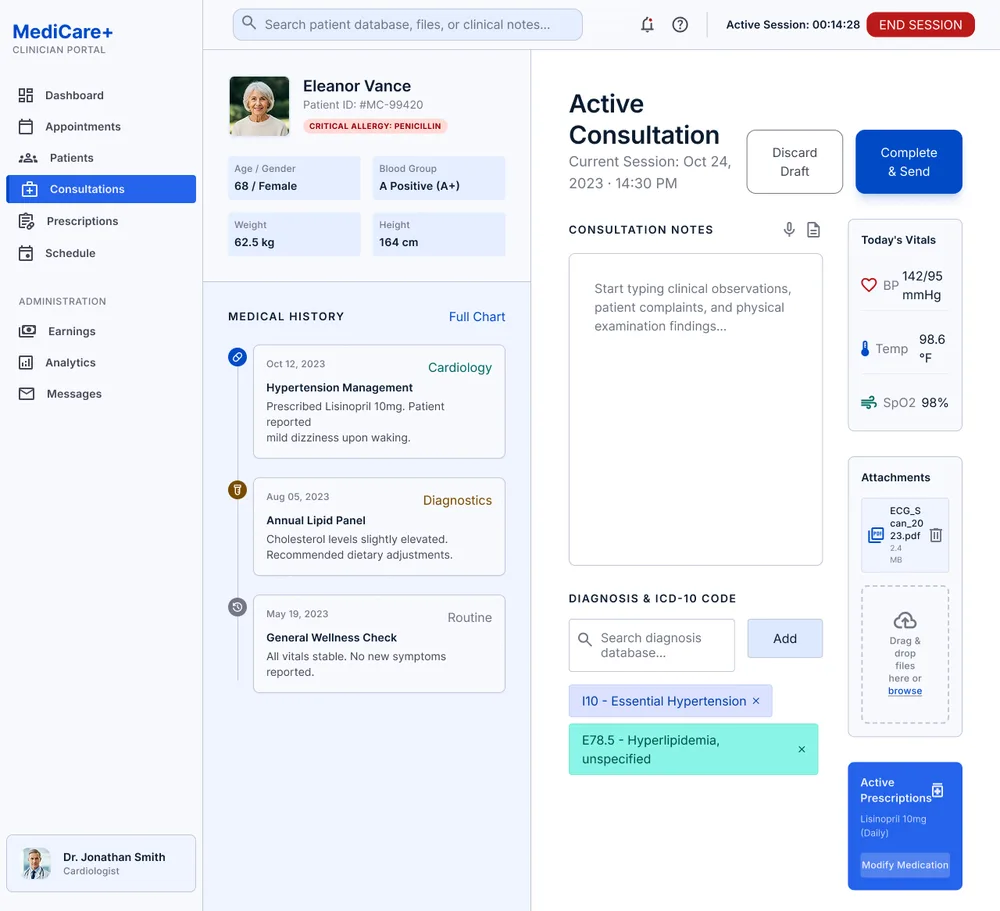
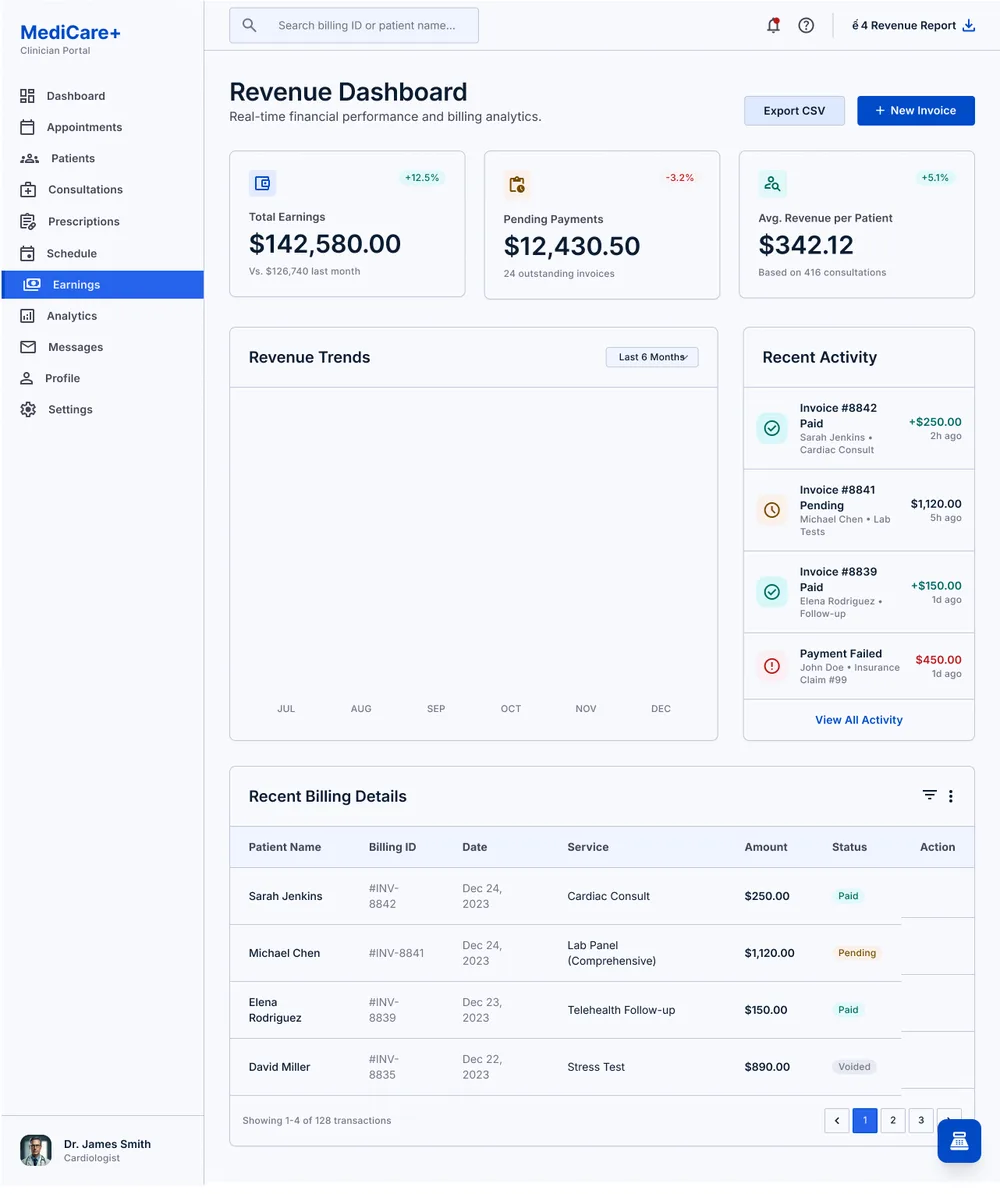
Schedule, video visits, prescribing & earnings.
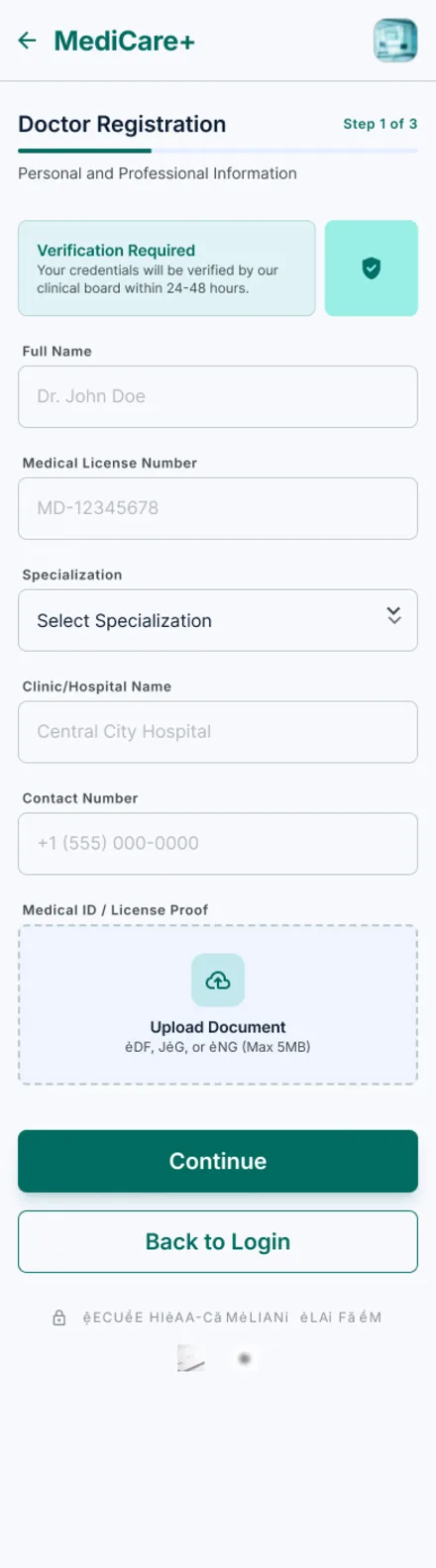
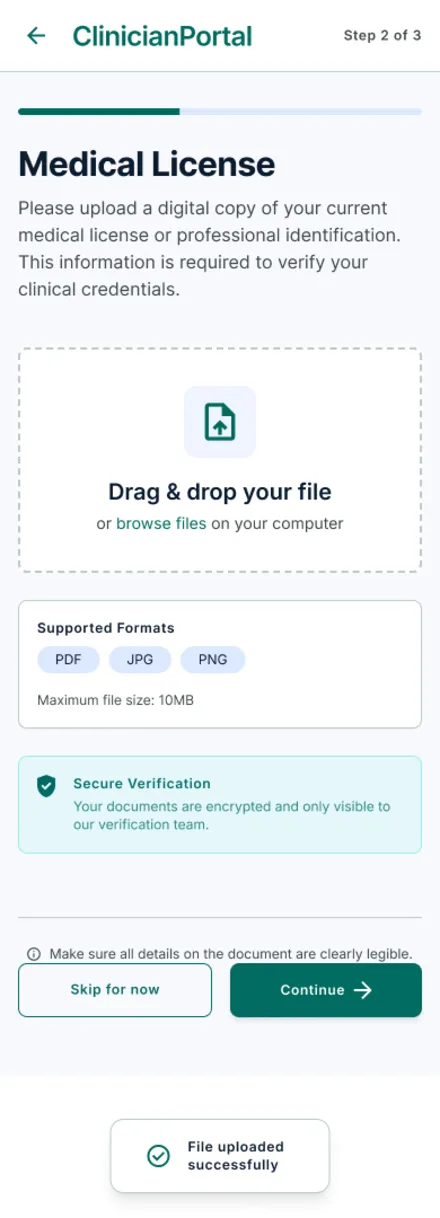
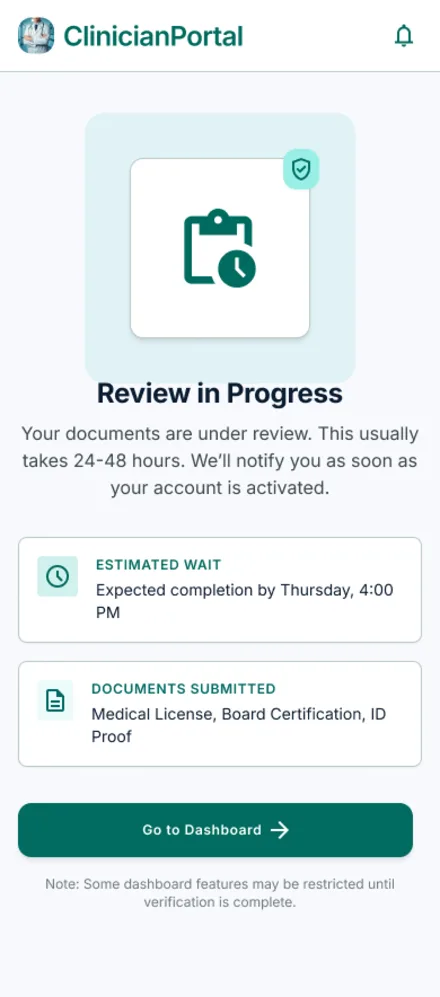
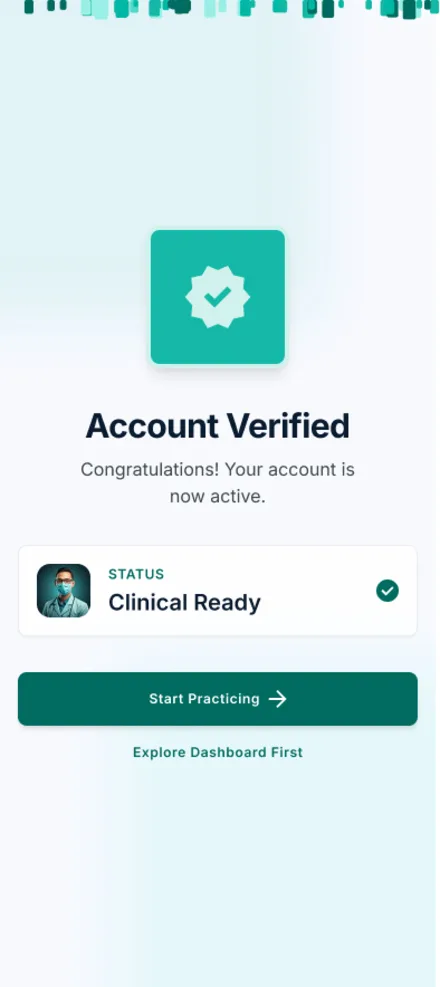
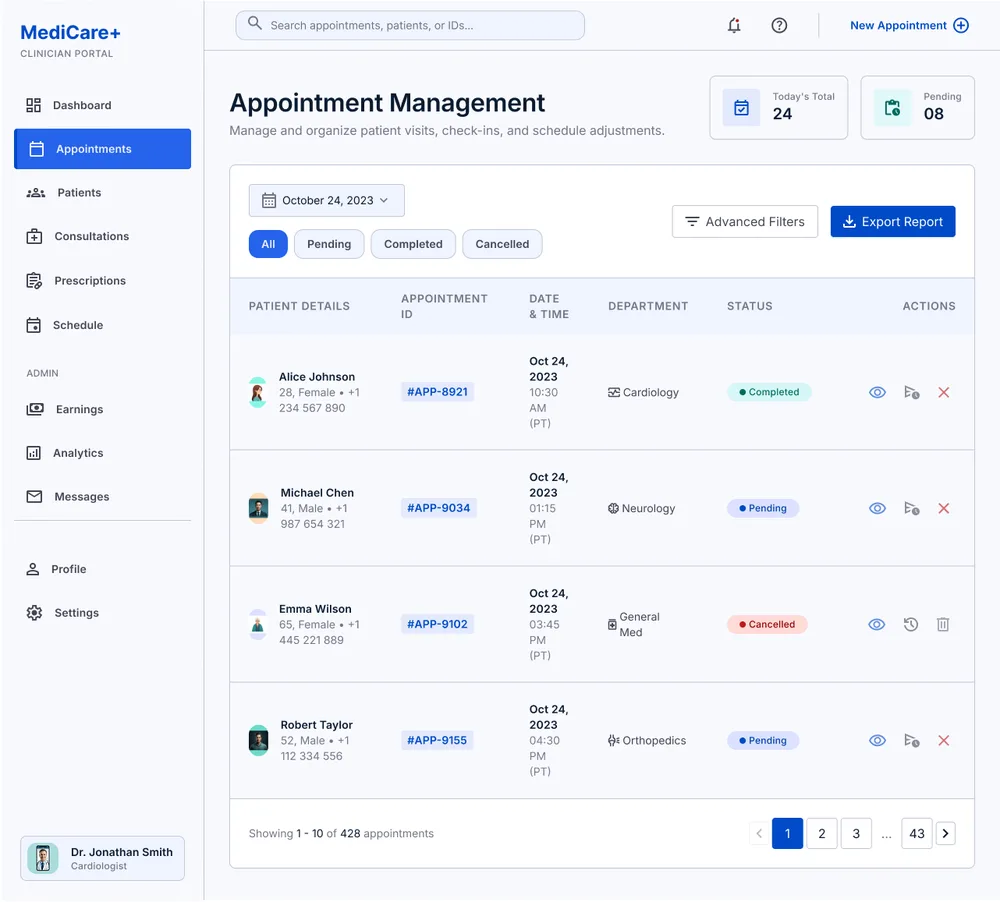
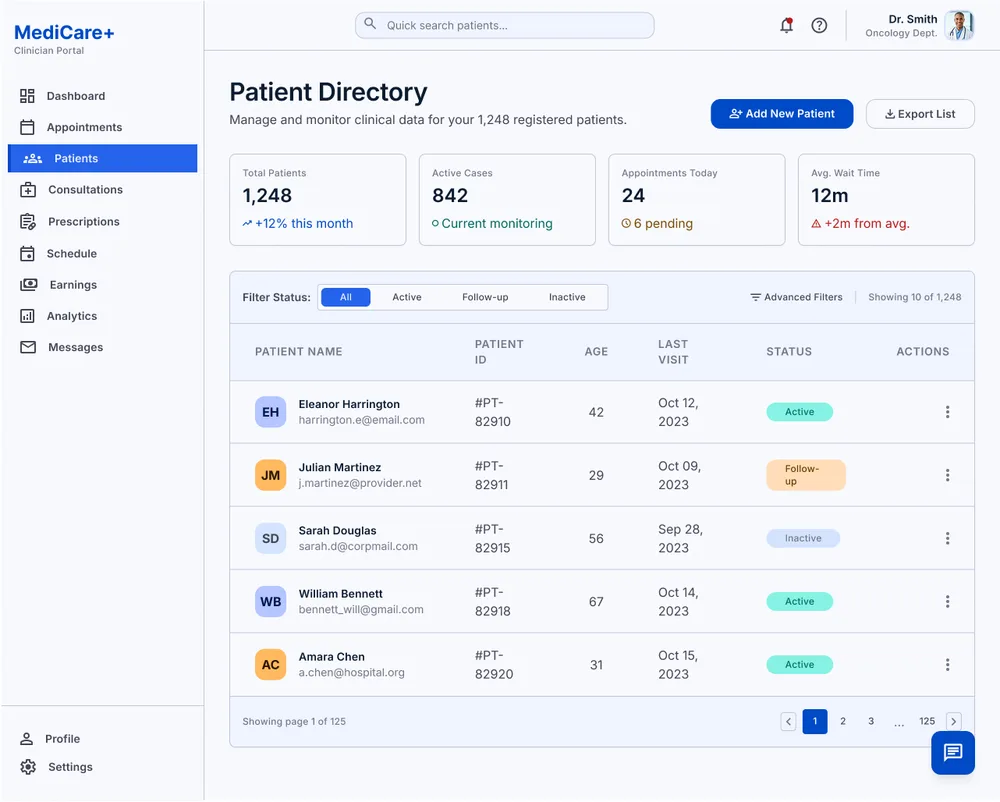
Onboarding, verification, documentation, payouts.
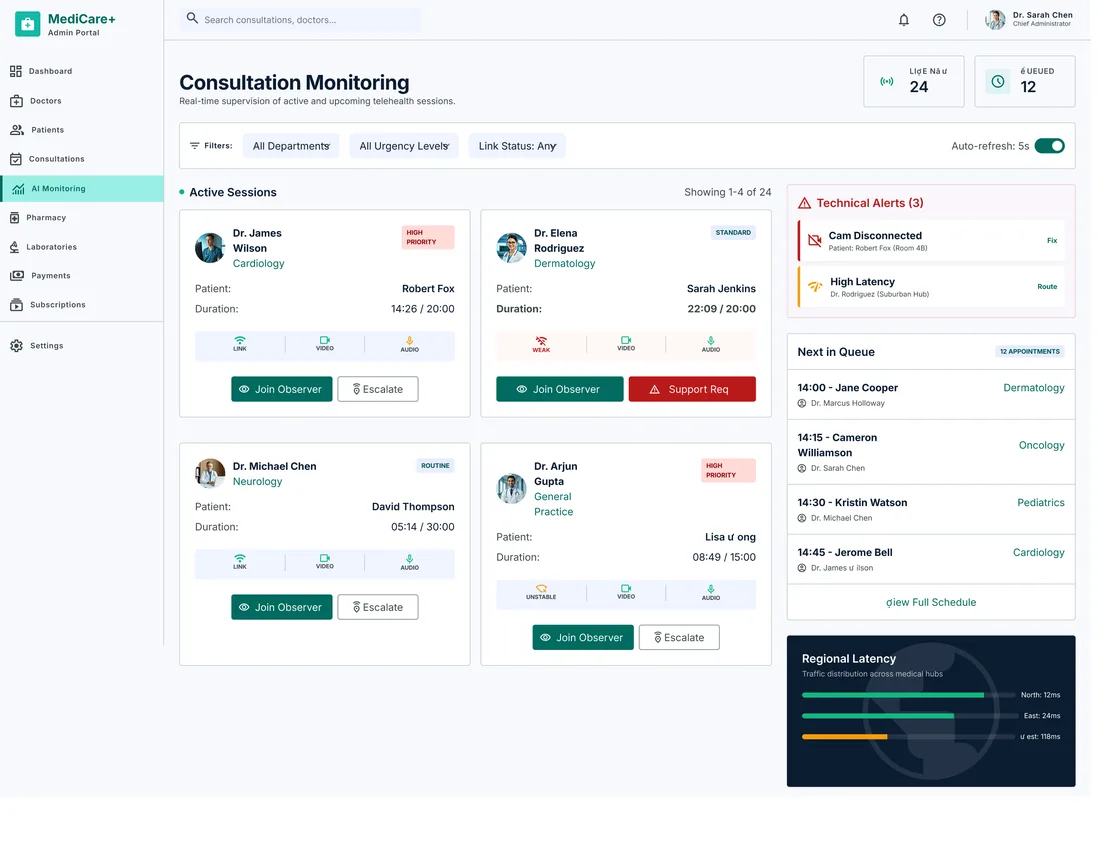
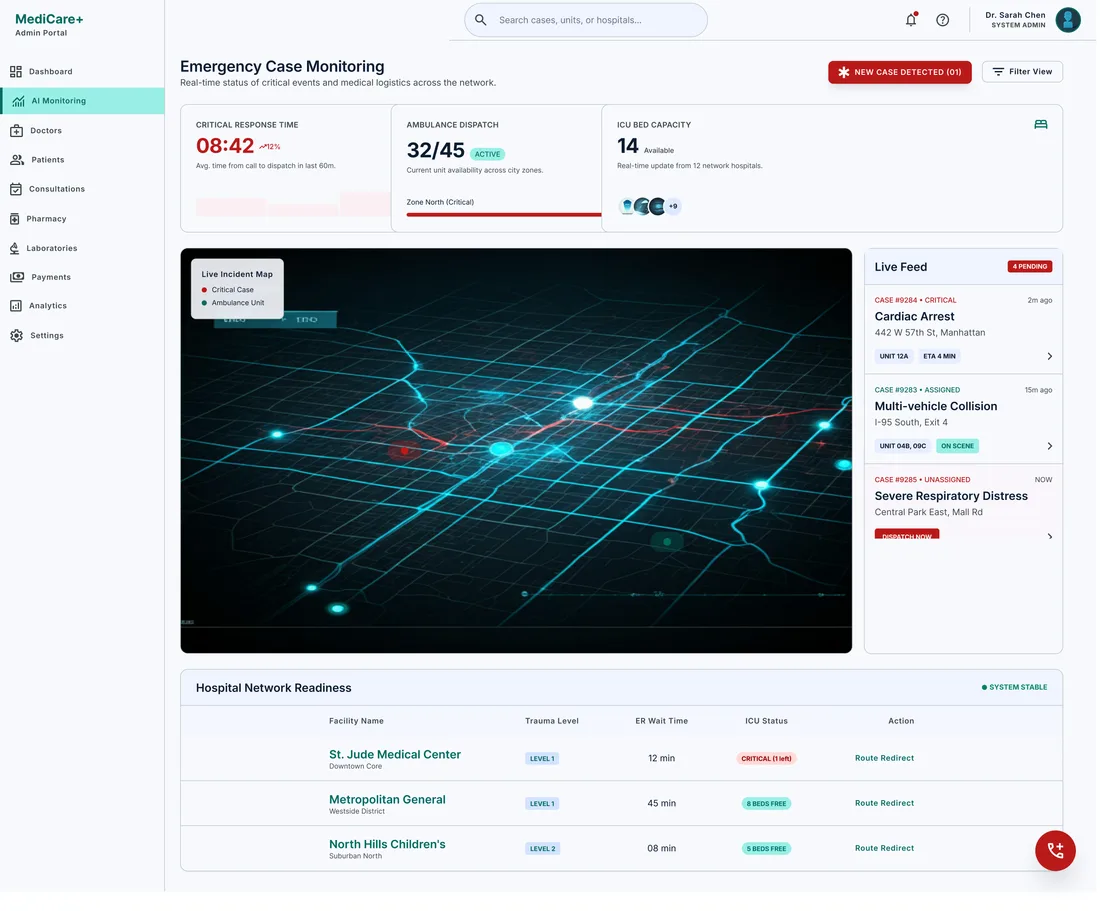
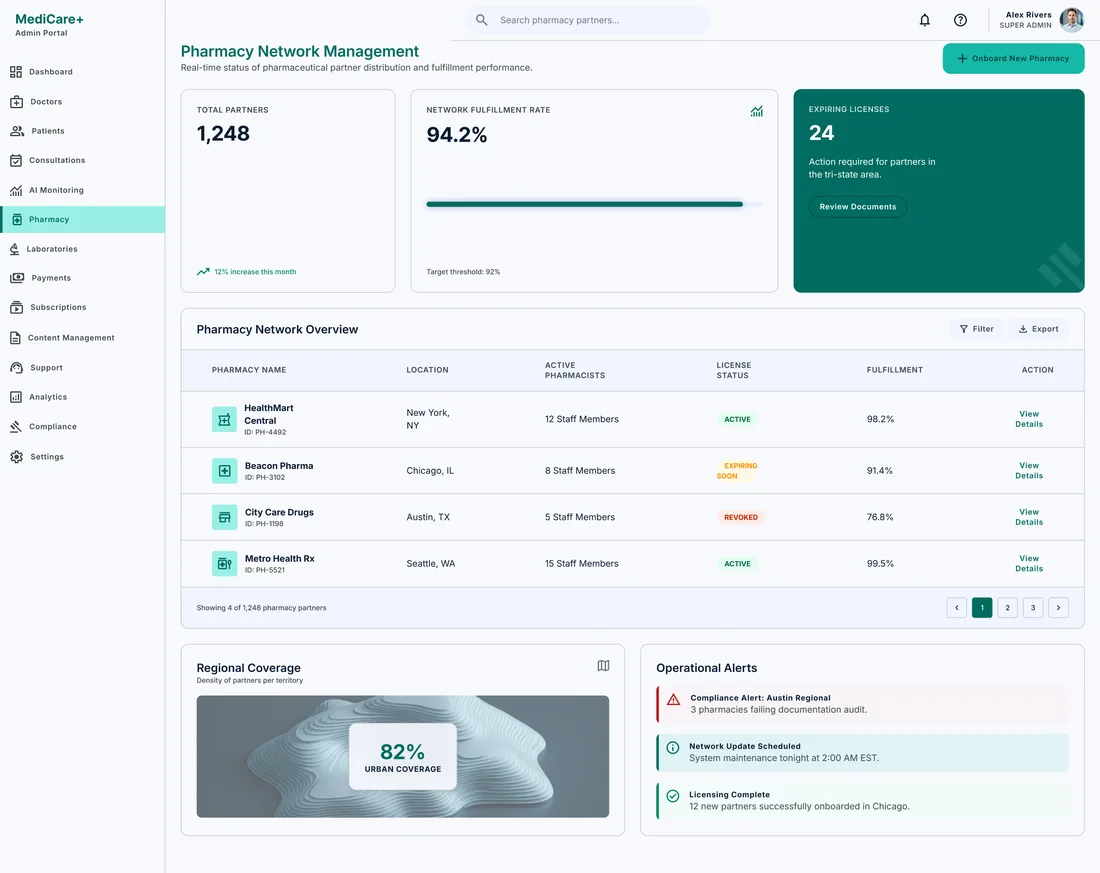
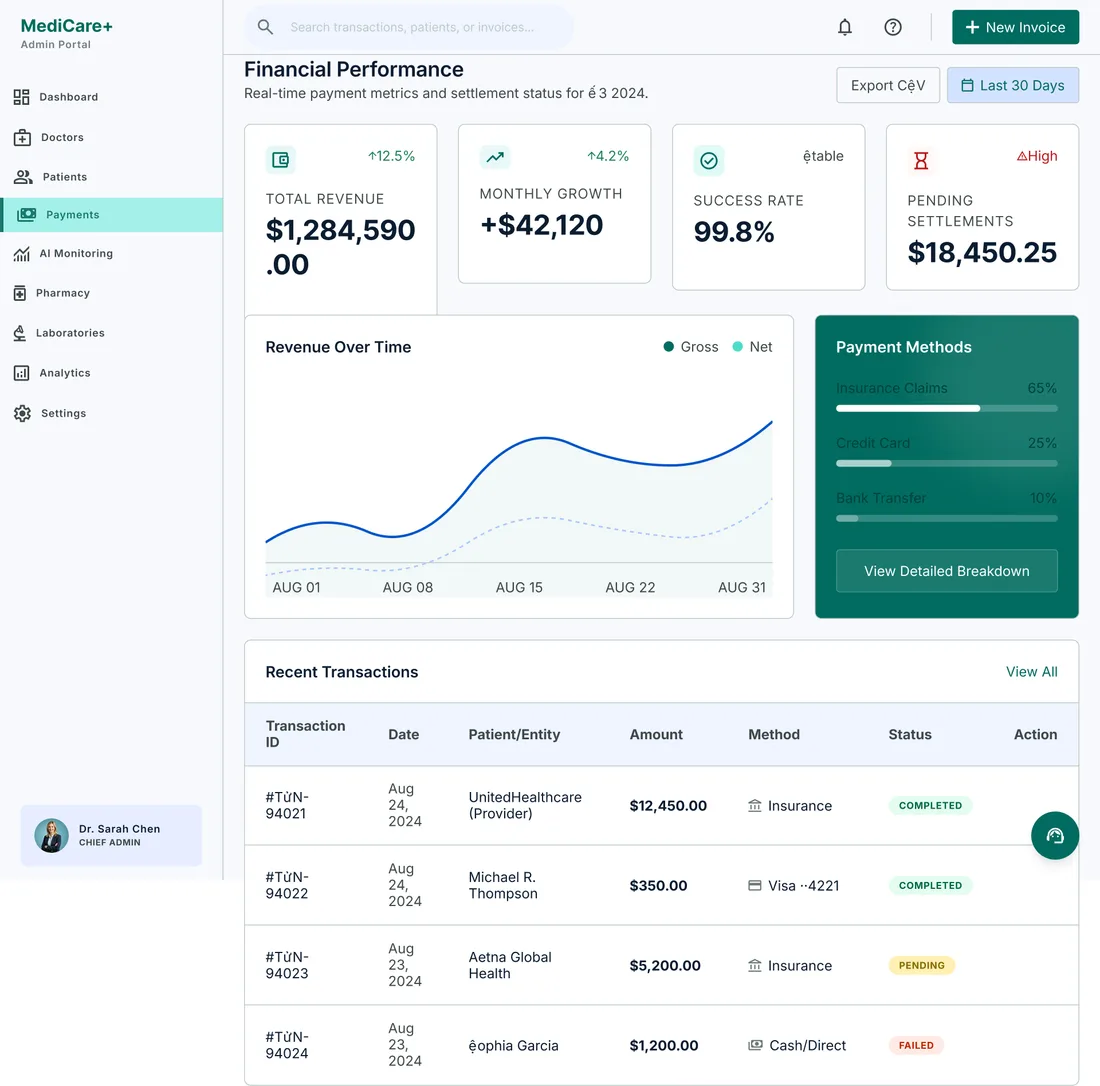
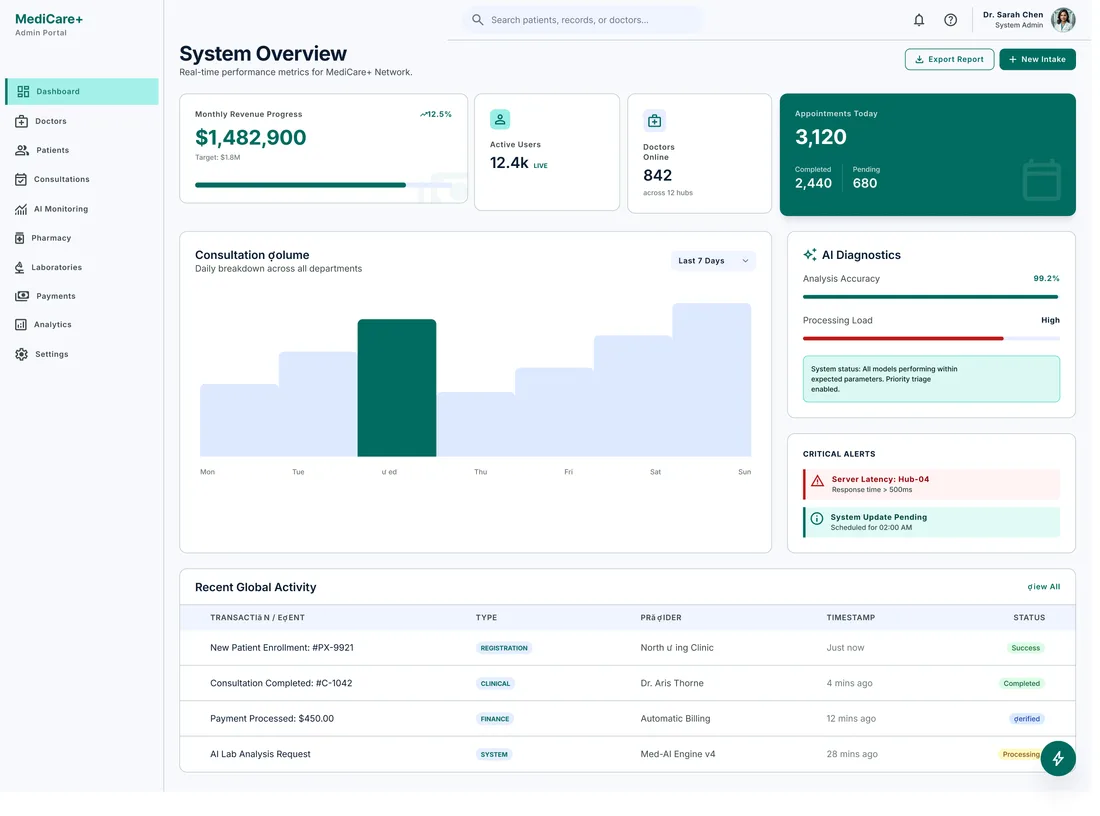
Network ops, compliance, pharmacy, labs, analytics.
One record carries the patient from a 2am symptom to a resolved outcome — six moves that never leave the platform.
A person with a symptom passes through five disconnected systems — and most give up before treatment ever starts. Each drop-off is a person who stayed sick, and revenue that never landed.
100 people notice a symptom. By the time treatment begins, two-thirds are gone.
The winner won't be a point tool — it'll be the platform that owns the connected journey, with trust and AI as the wedge.
The gap isn't access to doctors. It's access to continuity — a system that remembers you.
Mixed methods built to separate what people say from what they actually do.
delay care — booking feels like a chore
want "is this serious?" before booking
distrust doctors without verification cues
more likely to return if records persist
abandon when fulfillment is separate
Each rival owns a slice — booking, telehealth or AI checks. None owns the connected loop from triage to delivery with trust built in.
Strong Partial Absent
Trust, doctor supply, brand recall.
Siloed features, clunky handoffs.
No AI front door tied to fulfillment.
Own the connected loop, trust-first.
A patient, a doctor and an admin — different stakes, one shared record.
Fast answers, trusted doctors, meds without a pharmacy trip.
Can't tell what's urgent; hates re-explaining history.
See more patients with less admin; predictable income.
Tool-switching; no pre-visit context.
A safe, compliant, high-utilization network.
Manual verification; reactive to incidents.
Framed around the outcomes people hire MediCare+ for, not the features they tap.
"When I feel unwell at an odd hour, help me know how serious it is — so I can act without panic."
"When a doctor advises a medicine, get it ordered and delivered — so treatment actually starts."
"When I manage my family's health, keep everyone's records in one place — so nothing slips."
"As a doctor between patients, give me context, notes and prescribing in one flow — so I save minutes."
One vision, three bets, and the principles that kept every decision aligned.
Make trustworthy healthcare feel as immediate and continuous as messaging a friend.
Weekly Care Journeys Completed — a symptom resolved within the platform.
Every actor connects through one record and one orchestration layer — a change in any node updates the whole system.
Mapping action against feeling shows exactly where trust breaks, and where a small design move pays off most.
Invest the most design effort at the two earliest, most anxious moments — triage and doctor trust — to unlock the entire downstream funnel.
A single consultation, blueprinted across the line of visibility.
| Triage | Booking | Consult | Prescribe | Fulfill | |
|---|---|---|---|---|---|
| Frontstage | AI chat & risk card | Doctor match & slot | Video room | Rx summary | Track delivery |
| Backstage | Triage model + safety rules | Availability engine | Notes workspace | Interaction checks | Pharmacy & courier |
| Systems | NLP + risk scoring | Scheduling DB | WebRTC + EHR | Drug DB + e-sign | Inventory + payments |
| Admin / support | Monitor AI accuracy | Verify doctors | Escalate emergencies | Compliance audit | Refunds & disputes |
The patient IA is deliberately shallow — every primary job is one tap from home. Depth lives only where clinical detail demands it.
The core loop, animated. A symptom enters the AI engine, branches by risk, flows through a doctor to fulfillment — then feeds back into one record that makes the next visit smarter.
Six capabilities turn an anxious "is this serious?" into a guided, safe next step — and feed structured context to every downstream product.
Conversational intake mapping symptoms to concerns.
Low / medium / high routing with safe escalation.
Always-on chat for questions and prep.
Plain-language interpretation of values & ranges.
Upload a report; get a summary & flags.
Dosage, interactions and adherence nudges.
Symptoms · history · vitals · profile
NLP · risk scoring · safety rules · confidence gate
Risk level · path · doctor brief · specialty
Faster, calmer, safer decisions


Senior design is defensible design. A sample of the calls — and the evidence behind them.
74% wanted severity before booking. Triage de-risks the scariest moment and pre-qualifies demand.
Hick's Law — cap primary choices at the five jobs people actually do; push rare actions deeper.
⅔ abandoned when meds lived elsewhere. Rx → delivery in-app protects outcome and revenue.
61% distrusted online doctors. Badges and ratings surface early to convert trust into bookings.
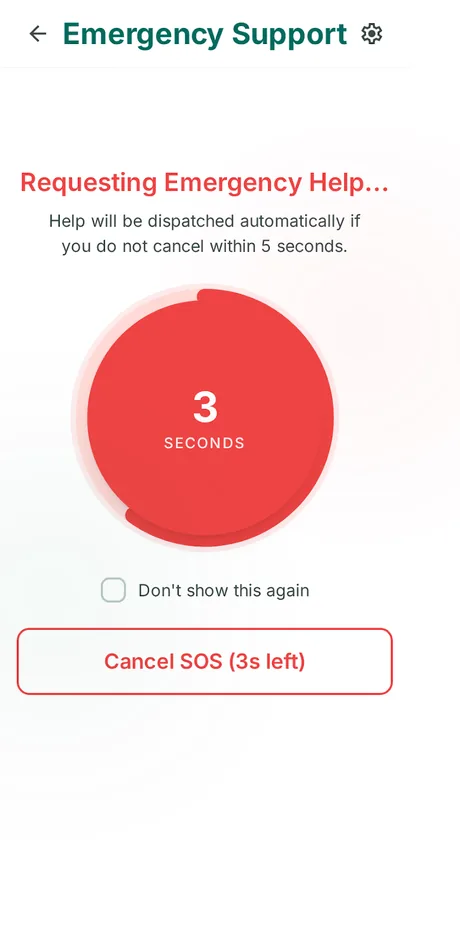
Emergencies can't compete with everyday UI. A separate, high-contrast path removes ambiguity.
Continuity drove 3.2× retention. Doctors get context; patients never repeat themselves.
Where established UX laws shaped real screens — named, and used on purpose.
| Law | How we applied it | Where | Impact |
|---|---|---|---|
| Hick's Law | 5 tabs; progressive disclosure of rare actions | Global nav | Faster starts |
| Fitts's Law | Thumb-zone CTAs; 48px+ targets | Booking, SOS | Fewer mis-taps |
| Jakob's Law | Familiar chat, cart & video patterns | AI, pharmacy | Low learning curve |
| Miller's Law | Health summary chunked into 3–4 cards | Home, records | Better recall |
| Doherty Threshold | Sub-400ms feedback; AI "thinking" states | Triage, search | Perceived speed |
| Tesler's Law | System absorbs complexity (routing, checks) | Rx, triage | Lower load |
| Peak–End Rule | Reassuring result + clean summary | Risk, summary | Higher CSAT |
| Aesthetic–Usability | Calm clinical visual system builds credibility | Whole product | Trust → conversion |
Built to WCAG 2.1 AA — the people who need care most often face the steepest access barriers.
Fidelity climbed only as questions got answered — structure first, then hierarchy, then the calm clinical skin.

Token-driven across iOS, Android and web — a button means the same thing for a patient, a doctor, or an admin.
4-pt base · 4/8/12/16/24/32/48
Mobile 4-col · Web 12-col · 24px gutter
68 components, fully variant-mapped
7 states per interactive token
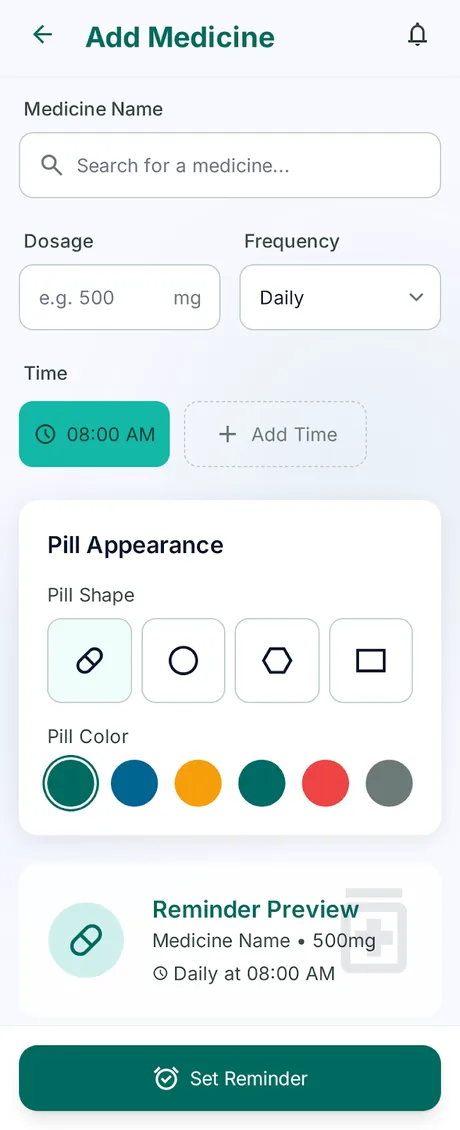
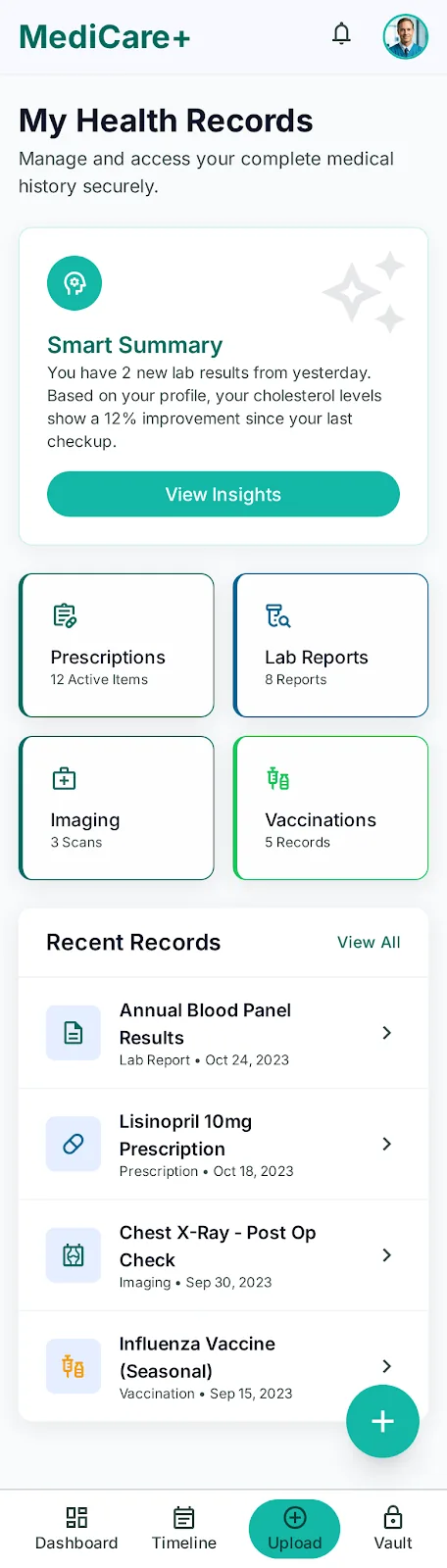
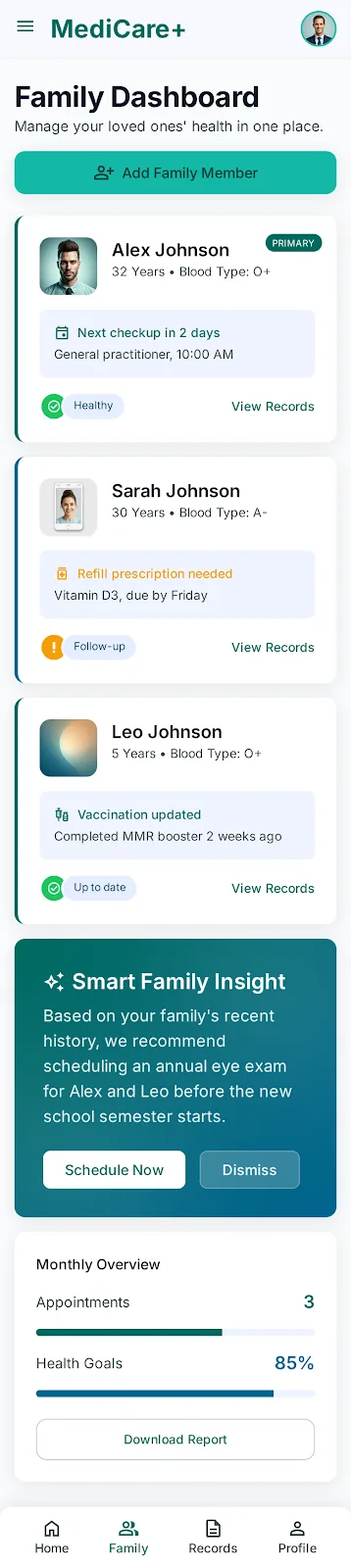
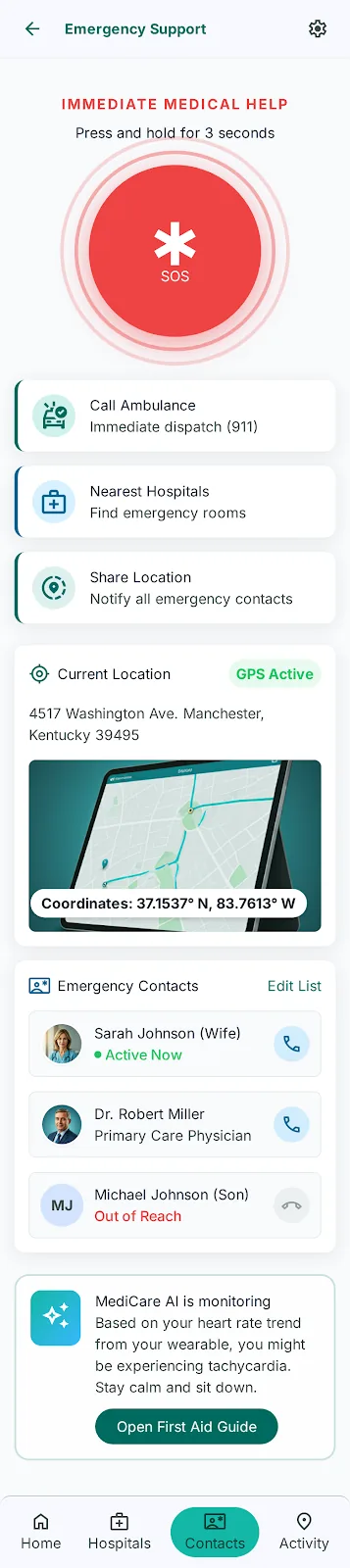
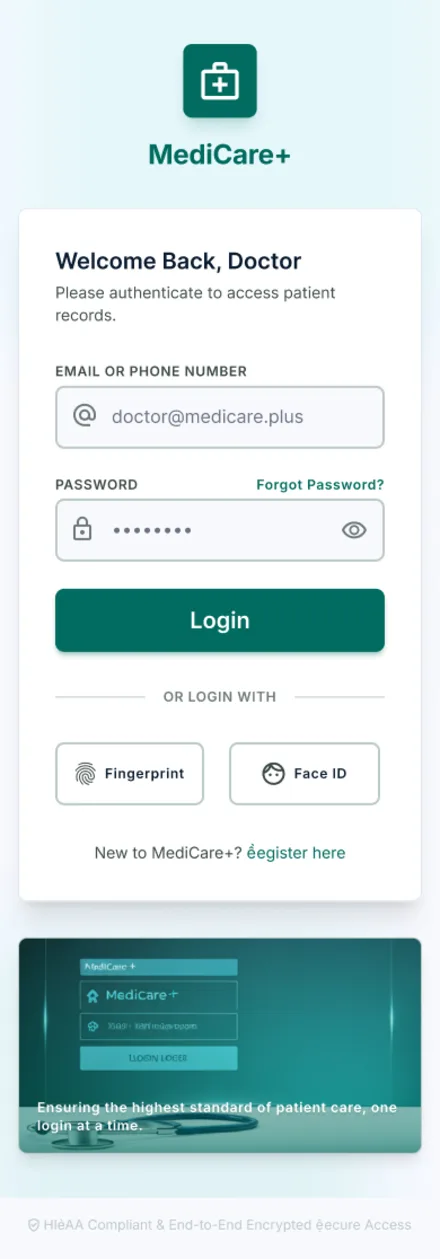
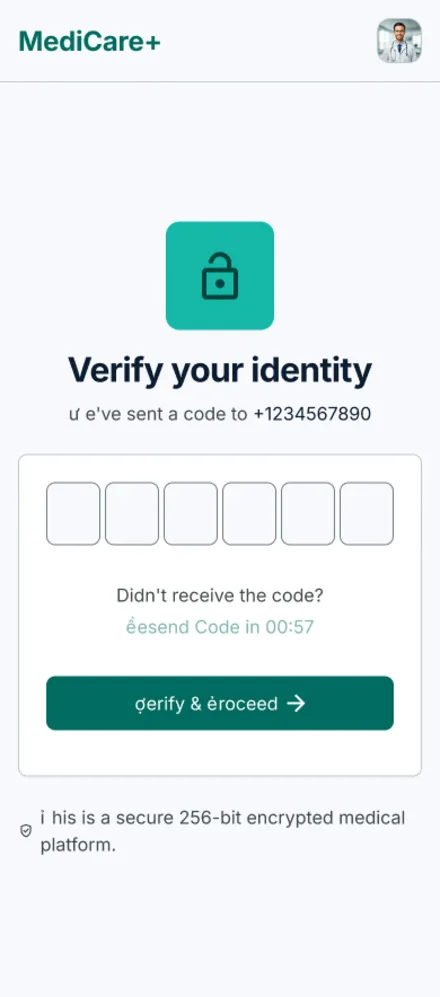
Four connected surfaces, one record. Swipe each rail to walk the real screens.


Healthcare can't degrade into a blank screen. Every failure state has a safe, human next step.
Auto-rebook, priority queue, goodwill credit.
Offline banner, retained inputs, audio-first fallback.
Slot held 10 min, clear retry, alt methods.
Red-flag interrupts flow → SOS + nearest hospital.
Notify-me, alt specialties, async message.
Specific reasons, re-upload, support — never a dead end.
Instant refund rules, one-tap rebook.
Escalating reminders, caregiver alert, refill nudge.
Rounds with real patients and doctors — what broke, what we fixed, what shipped.
The same screens, versions apart — every change earned by a test or a constraint.
Buried under "Book" → promoted to a hero home action. Triage starts ▲ 2.4×.
Name + price → verified badge, rating, next slot. Booking intent ▲ 31%.
3 screens + handoff → one screen, in-app cart. Attach rate ▲ 27%.
Outcomes from the pilot cohort. Modeled figures are labeled projected.
The north star moved because the whole loop moved — triage fed bookings, bookings fed fulfillment, fulfillment fed retention.
Pilot cohort, 6 months. Revenue-per-user and projected figures modeled from conversion, attach-rate and retention deltas; labeled where not directly measured.
What ships once the loop is trusted — and where the AI gets smarter.
The calls I'd repeat, the ones I'd change, and what leading this taught me.